If you’ve ever walked past a construction site, a high-ceilinged warehouse, or a film set, you’ve likely seen a platform rising steadily into the air on a lattice of crisscrossing metal braces. These machines are essential for modern industry, but have you ever stopped to wonder, how does a scissor lift work?
Understanding the mechanics behind these machines is more than just a curiosity—it’s vital for safety, efficiency, and choosing the right tool for the job. Whether you are an operator, a project manager, or a DIY enthusiast, this guide will dive deep into the mechanics, components, and “7 powerful facts” that define these mechanical marvels.
What is a Scissor Lift?
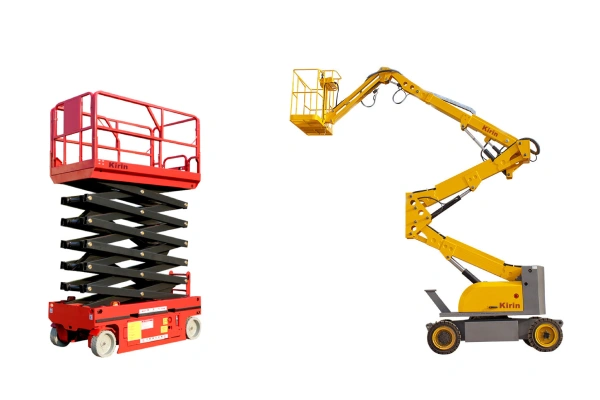
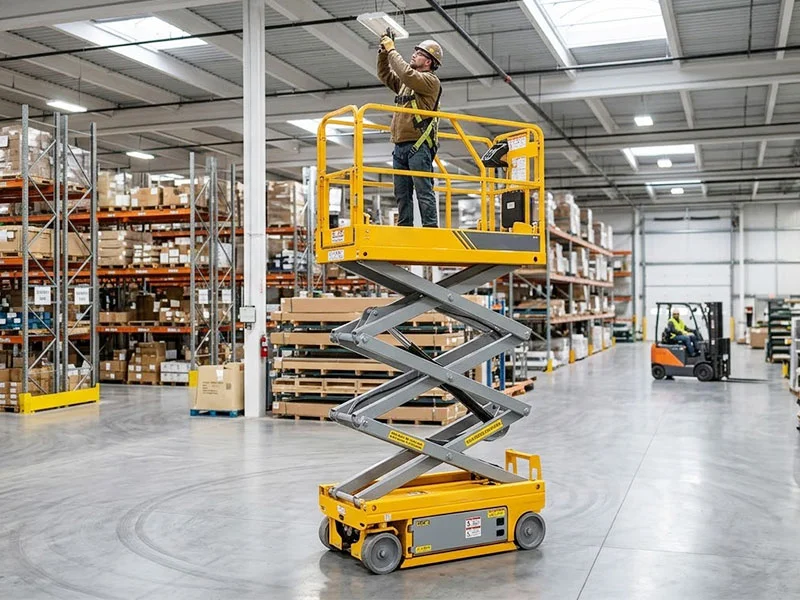
At its core, a scissor lift is a type of Aerial Work Platform (AWP) or Mobile Elevating Work Platform (MEWP). Unlike boom lifts, which can reach out horizontally, a scissor lift is designed to move strictly in a vertical direction. Its primary purpose is to provide a safe, stable platform for workers and their equipment to reach heights that would otherwise require scaffolding or ladders.
Key Features
- Vertical Lift: The movement is strictly up and down, making it ideal for tasks directly overhead.
- Stable Platform: Because the weight of the platform is supported by a wide base of scissor arms, it offers significantly more stability and a larger “footprint” for workers compared to a ladder.
Types of Scissor Lifts
Before we get into the “how does a scissor lift work” mechanics, it’s important to know that the power source often dictates the environment where the lift is used:
- Hydraulic Scissor Lifts: Driven by pressurized liquid, these are the industry standard for many basic models.
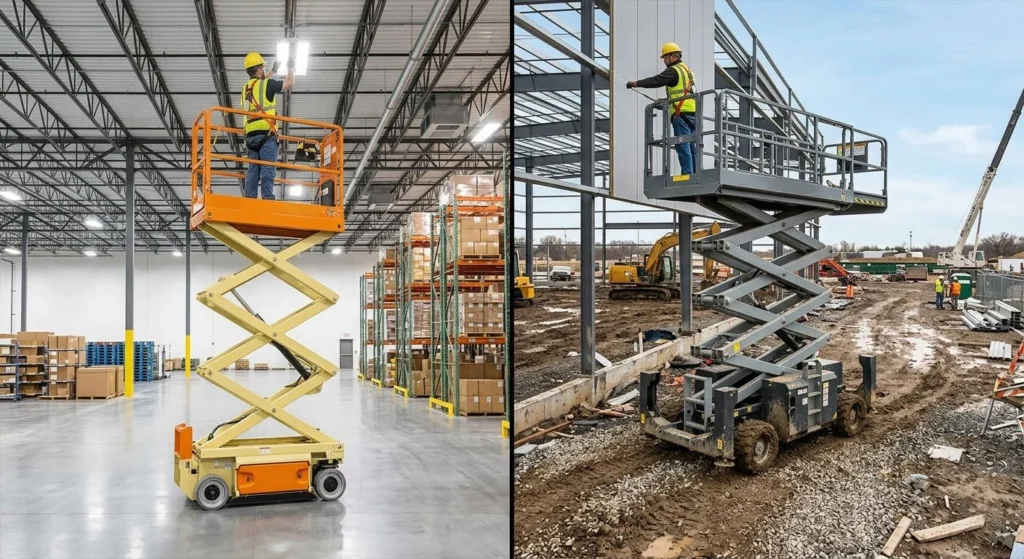
- Electric Scissor Lifts: Powered by heavy-duty batteries. These are quieter, emit no fumes, and are preferred for indoor use on flat surfaces.
- Diesel-Powered Scissor Lifts: Also known as “Rough Terrain” lifts. These have high-torque engines and four-wheel drive, designed to navigate muddy or uneven outdoor construction sites.
Main Components of a Scissor Lift
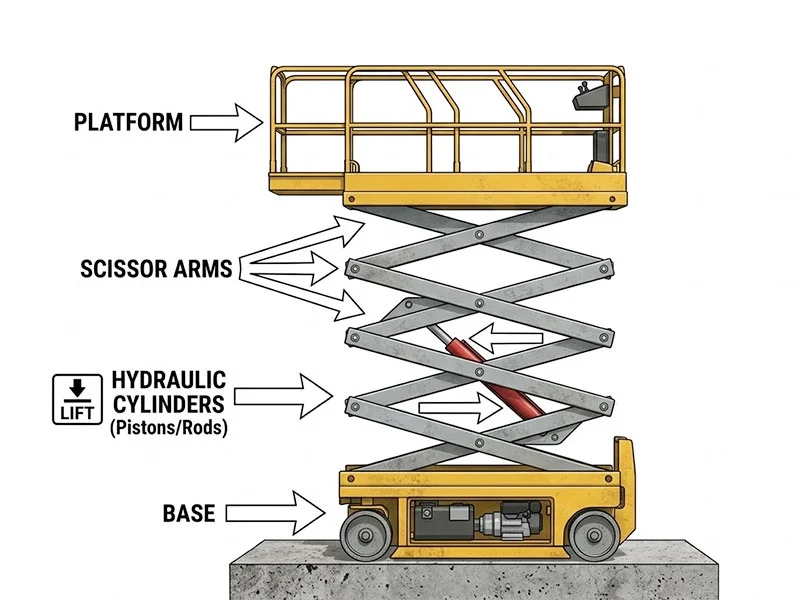
To answer the question, how does a scissor lift work, we must first identify the “anatomy” of the machine. Every scissor lift is a symphony of mechanical, hydraulic, and electrical parts working in unison.
Base Frame
The base is the foundation. It houses the wheels, the power source, and the structural support that prevents the lift from tipping over. In rough terrain models, this base is reinforced and equipped with outriggers for extra stability.
Platform/Work Deck
This is the “business end” of the machine. It is the flat area where operators stand. Most platforms include an extension deck that can slide out to provide a bit more reach or space for materials.
Scissor Arms (Linked Supports)
These are the iconic, X-shaped metal bars that give the lift its name. They are pinned together in the middle and at the ends. As the ends of the arms are pushed together, the “X” shapes elongate vertically.
Hydraulic System
This is the “muscle” of the machine. It typically consists of:
- Hydraulic Cylinders: The pistons that push the arms apart.
- Hydraulic Fluid: The medium that transfers power.
- Pump: The component that moves the fluid under pressure.
Power Source
Depending on the model, this is either a bank of deep-cycle lead-acid batteries or an internal combustion engine (Diesel or Dual-Fuel).
Control System
Located both on the base (for emergency ground control) and on the platform (for the operator), these controls allow for lifting, lowering, and steering.
How Does a Scissor Lift Work?
Now, let’s get into the step-by-step mechanics. The hydraulic scissor lift working principle relies on basic physics: the conversion of energy into pressurized fluid movement, which is then converted into mechanical force.
Step 1: Power Activation
The process begins when the operator engages the controls on the platform. The power source (battery or engine) activates the hydraulic pump.
Step 2: Hydraulic System Pressurization
The pump draws hydraulic fluid from a reservoir and forces it into the hydraulic cylinders. Because the fluid is incompressible, the pressure builds up rapidly.
Step 3: Scissor Mechanism Expansion
As the fluid enters the cylinders, it pushes the piston rod outward. This rod is connected to the scissor arms. As the piston extends, it forces the bottom of the scissor arms to slide closer together along tracks in the base.
Step 4: Controlled Elevation
Because the arms are pinned in a pantograph pattern, narrowing the horizontal distance between the bottom pins forces the entire stack to expand upward. This is the core of how a scissor lift works: small horizontal movements at the base result in large vertical movements at the top.
Step 5: Lowering the Platform
Lowering the lift is usually a gravity-assisted process. A release valve (controlled by the operator) allows the hydraulic fluid to flow slowly back into the reservoir. The weight of the platform pushes the fluid out, and the scissor arms fold back down into their compact state.
The Role of Hydraulics in Scissor Lifts
Hydraulics are the most common answer to “how does a scissor lift work.” The beauty of a hydraulic scissor lift working principle is force multiplication. By using a small pump to move fluid into a cylinder with a larger surface area, the machine can lift thousands of pounds with relatively low energy input.
Hydraulic systems are also preferred because they provide “infinitely variable” control. You aren’t limited to specific “steps” or “gears”; the operator can raise the platform by a fraction of an inch or several feet just by adjusting the flow of fluid.
Safety Features in Scissor Lifts
Operating at heights is inherently risky, which is why modern lifts are packed with safety tech.
- Guardrails and Toe Boards: These prevent workers and tools from accidentally falling off the platform edge.
- Emergency Stop Buttons: Located on both the platform and the ground, these cut all power immediately.
- Overload Protection Systems: These sensors detect if the weight on the platform exceeds the rated capacity, preventing the lift from rising if it’s unsafe.
- Tilt Sensors and Alarms: If the lift is on an incline that exceeds its safety rating, an alarm will sound, and the lifting function may be disabled.
- Maintenance Locks: These are physical bars that can be swung into place between the scissor arms to prevent the lift from collapsing while a technician is working inside the mechanism.
Advantages of Scissor Lifts
Why choose a scissor lift over a cherry picker or scaffolding?
- Vertical Lifting Efficiency: They take up very little floor space relative to the work area they provide.
- High Load Capacity: Because the platform is supported directly from underneath, scissor lifts can often carry much heavier loads (multiple workers and heavy tools) than boom lifts.
- Stability: The wide base and centered weight distribution make them incredibly stable.
- Easy Operation: Most models have intuitive joystick controls that require minimal training compared to complex crane systems.
Common Applications of Scissor Lifts
Understanding how a scissor lift works helps you realize why they are so versatile.
- Construction: Used for installing HVAC systems, electrical wiring, and ceiling panels.
- Warehousing: Crucial for “picking” inventory from high shelves or performing maintenance on overhead lighting.
- Building Maintenance: Tasks like window washing, painting, or changing light bulbs in stadiums and malls.
- Indoor vs. Outdoor: Electric models are used in clean, indoor environments like hospitals or data centers, while diesel models tackle the mud and debris of outdoor construction.
Common Issues and How They Affect Operation
Even the best machines can fail. Here is how mechanical issues impact how a scissor lift works:
- Hydraulic Leaks: A leak in a hose or seal will cause the lift to “drift” downward or fail to lift entirely due to a loss of pressure.
- Power Failure: In electric models, old batteries may not provide enough voltage to run the pump under a full load.
- Uneven Lifting: This usually indicates a mechanical obstruction in the tracks or a bent scissor arm, which can lead to dangerous instability.
- Wear and Tear: Over time, the pins that hold the scissor arms together can wear down, leading to “play” or wobbling in the platform.
Maintenance Tips for Optimal Performance
To ensure your scissor lift how it works efficiently for years, follow these maintenance steps:
- Regular Hydraulic Fluid Checks: Ensure the fluid is clean and at the correct level. Contaminated fluid can damage the pump.
- Inspect Scissor Arms and Pins: Look for cracks in the welds or signs of metal fatigue.
- Battery and Electrical System Maintenance: Keep battery terminals clean and ensure they are watered (if using lead-acid batteries).
- Routine Safety Inspections: Test the emergency stop and tilt sensors before every shift.
Frequently Asked Questions (FAQ)
How high can a scissor lift go?
Most standard scissor lifts reach between 20 and 50 feet. However, specialized high-reach models can go up to 60 or 70 feet.
Are scissor lifts safe?
Yes, when used according to OSHA guidelines. Most accidents are caused by operator error (overloading or driving on uneven ground) rather than mechanical failure.
What is the difference between a scissor lift and a boom lift?
A scissor lift moves only vertically. A boom lift has a “neck” that can extend both vertically and horizontally, allowing it to reach over obstacles.
Can scissor lifts be used outdoors?
Yes, but you must use a “Rough Terrain” model (usually diesel or 4WD electric) that is rated for wind and uneven surfaces.
Conclusion
So, how does a scissor lift work? It is a masterpiece of hydraulic power and geometric design. By using the hydraulic scissor lift working principle, these machines turn fluid pressure into the vertical force necessary to lift thousands of pounds safely.
Understanding how the scissor lift works—from the activation of the pump to the expansion of the scissor arms—is the first step in becoming a proficient user or a smart equipment buyer. When you respect the mechanics and the safety protocols, a scissor lift becomes one of the most powerful tools in your industrial arsenal.