Navigating the world of material handling and vertical access equipment can be complex. Two terms you’ll encounter frequently—and often confusedly—are “hoist” and lift machine. While both categories of equipment are essential for raising and lowering heavy loads or personnel, their design, function, applications, and core mechanisms are fundamentally different. Understanding these distinctions is critical for safety, efficiency, and compliance on any industrial, construction, or maintenance project.
This comprehensive guide will break down the key differentiators between a hoist and a lift machine, explore their respective use cases, and help you determine the best lifting solution for your specific needs. The proper selection of a lift machine can make the difference between a streamlined operation and costly logistical headaches.
What is a Hoist?
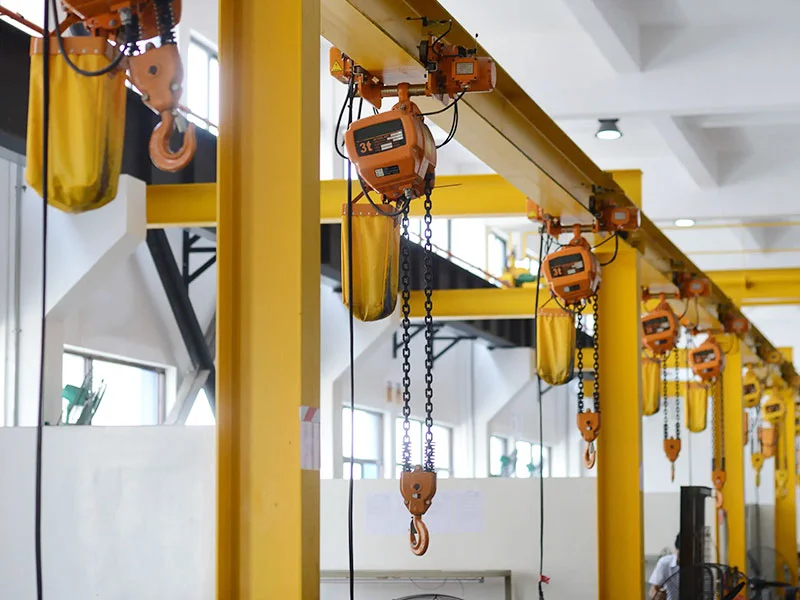
A hoist is, at its core, a mechanical device engineered specifically for the purpose of vertically lifting and lowering a suspended load—that is, the load is typically attached to a hook that hangs freely below the mechanism.
Design and Mechanism
Hoists operate primarily by means of a drum or lift-wheel around which a rope, chain, or wire (the lifting medium) is wound or unwound. This creates a purely vertical path of travel.
- Lifting Medium: The most common types are wire rope hoists (for higher capacities and lifting speeds, often used in severe-duty applications) and chain hoists (more compact, portable, and often used for lighter loads, typically under 5 tons).
- Power Source: Hoists can be powered manually (lever or hand-chain), electrically (the most common type for industrial use), or pneumatically (air-powered, often favored in hazardous or explosive environments due to their spark-resistant design and 100% duty cycle).
- Mobility: Hoists are frequently integrated into larger systems like cranes (e.g., overhead cranes, gantry cranes, jib cranes) where the hoist mechanism itself is mounted to a trolley that allows for horizontal movement (traversing) of the suspended load. Without the trolley, a hoist only performs vertical movement.
Primary Function and Application
The primary function of a hoist is precision load positioning and the repetitive lifting of very heavy materials and equipment. They are designed for high-capacity, heavy-duty tasks where the load needs to be moved from point A directly below the hoist to a point B directly below the hoist.
- Industrial Settings: Integral to manufacturing and assembly lines for moving raw materials, large components, or finished products.
- Warehousing: Used for heavy material handling, moving freight, or positioning goods.
- Construction: Employed as material hoists or personnel hoists (often called a ‘Buckhoist’ or temporary elevator) on high-rise building projects, where a cage or platform travels up a mast to move materials and construction crews.
- Automotive/Maintenance: Used to lift engines, machinery, and other heavy parts.
What is a Lift Machine?
A lift machine (or simply a “lift”) is a broader category of equipment designed to transport people or goods between different vertical levels and, in many cases, to provide elevated work platforms for access. Unlike a hoist, a lift machine often includes a platform, cage, or car that provides a secure, level surface for the load or person being moved.
The term lift machine is highly encompassing, covering everything from the common elevator found in commercial buildings to specialized construction equipment.
Design and Mechanism
The mechanisms of a lift machine vary significantly by type but generally involve a stable platform or car moving along a guiding structure, or an extension mechanism that elevates the platform.
- Elevator/Passenger Lift: Uses a motorized car that travels along vertical rails within a shaft, often utilizing wire ropes and counterweights, or hydraulic cylinders for lower-rise applications. This is a classic example of a fixed, permanent lift machine.
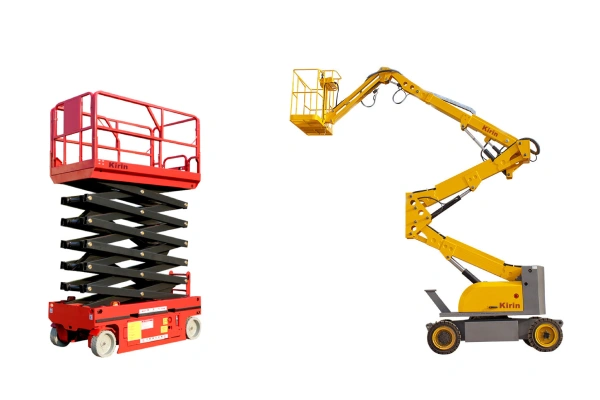
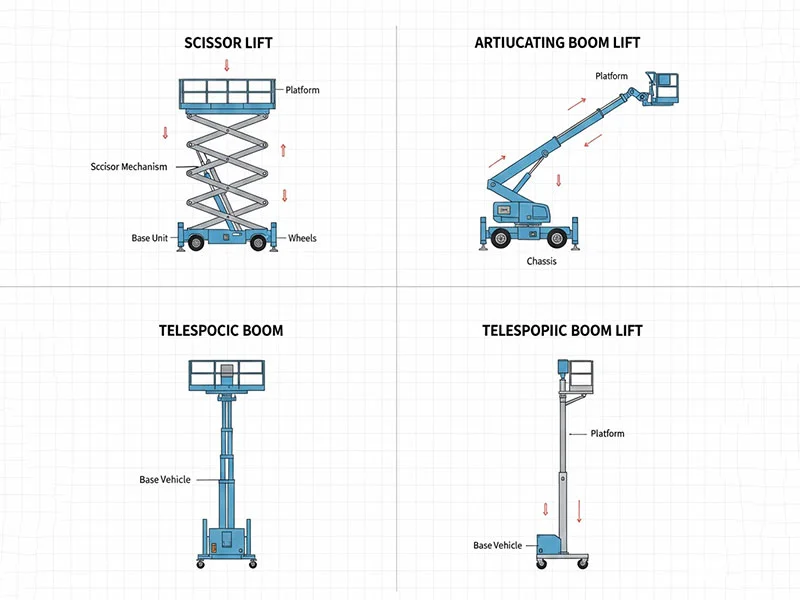
- Aerial Work Platforms (AWPs) / Mobile Elevating Work Platforms (MEWPs): These include scissor lift machines and boom lift machines.
- Scissor Lifts: Use a crisscrossing, accordion-like set of supports (the scissor lifting machine mechanism) to raise and lower a spacious work platform. The platform moves strictly vertically.
- Boom Lifts: Use a hydraulic boom (articulating or telescopic) to move a work platform not only vertically but also horizontally or at an angle, providing incredible reach and versatility to access hard-to-reach areas. This is a common aerial lift machine.
Primary Function and Application
The primary function of a lift machine is access, transportation, and elevating a stable work area. Safety systems are typically more advanced than basic hoists, especially when designed for personnel transport.
- Personnel Access: Providing safe and stable elevated working positions for construction, maintenance, and finishing work.
- Vertical Transportation: Permanent passenger and freight elevators for moving people and goods within multi-story buildings.
- Material Positioning: In a warehouse, this could be a forklift (a type of lift machine) for stacking pallets, or a platform lift for moving goods between floors.
Key Differentiators: Hoist vs. Lift Machine
While both hoists and lift machines move things up and down, their differences are substantial and rooted in their intended use.
| Feature | Hoist | Lift Machine |
| Primary Goal | Precise vertical lifting and positioning of a suspended load (materials). | Transporting personnel or goods, or providing a stable elevated platform (access). |
| Load Interface | Load is suspended from a hook, often swinging freely (unguided). | Load is carried on a platform, car, or cage, offering a stable, guided surface. |
| Movement | Primarily vertical lifting/lowering. Horizontal movement (traversing) is secondary, via a separate trolley. | Often capable of both vertical and horizontal movement (e.g., boom lifts, forklifts), or only guided vertical movement (e.g., elevators, scissor lifts). |
| Control | Typically controlled by an operator on the ground via a pendant or remote, or integrated into a larger crane system. | Often controlled from the platform/car itself by the personnel being lifted (machine that lifts you up), or with external call/send buttons (e.g., elevators). |
| Design | Focused on the drum/pulley mechanism and lifting medium (chain/wire rope). | Focused on the structural stability of the platform, guiding systems (rails/mast), or extending mechanism (scissors/boom). |
| Safety | Basic overload protection, brakes, and limit switches. | Advanced safety systems, including sophisticated braking, platform leveling, railings, emergency stops, and often designed to carry personnel safely. |
The Critical Distinction: Suspended vs. Supported
The most fundamental difference is this: a hoist lifts a suspended load from a single attachment point (a hook), prioritizing raw lifting power and precision positioning. A lift machine elevates a supported load on a platform, prioritizing stability, access, and the safety of the occupants.
Application Case Studies
The choice between a hoist and a lift machine is determined entirely by the task at hand. Selecting the wrong equipment can lead to accidents, inefficiency, and damaged materials.
When to Use a Hoist: High Capacity and Precision Material Movement
Hoists are the ideal choice when your work requires moving extremely heavy materials and equipment straight up and down or across a fixed track (like an overhead beam) with maximum control.
- Engine Installation: Lifting and precisely setting a large motor block into a vehicle frame or a turbine into a power plant.
- Die and Mold Handling: Changing heavy dies in stamping or injection molding presses, where millimeter-level positioning is crucial.
- Heavy Fabrication: Moving steel plates or beams during welding and assembly processes in a factory bay.
- Construction Material Transport (Temporary): Using a temporary personnel/material hoist to ferry workers and palletized loads rapidly up the exterior of a skyscraper under construction.
When to Use a Lift Machine: Access, Versatility, and Personnel Transport
Lift machines are essential when you need a stable platform for a person to work from, or when you need to transport goods or people across multiple levels of an established structure.
Passenger Lifts: Permanent Vertical Transport
These are the most familiar type of lift machine. They are permanently installed, guided machines designed almost exclusively for moving people quickly and safely between the floors of buildings. They operate within a protected shaft and are governed by strict building and safety codes.
Freight Lifts: Guided Material Transport
Similar to passenger lifts, but optimized for heavier, non-human loads. Freight lift machines often have reinforced cars and doors and are used for moving pallets, barrels, and large equipment between a building’s floors in a highly controlled, repeatable manner. They replace the temporary functionality of a construction material hoist with a permanent, integrated solution.
Scissor/Boom Lifts: Aerial Access
These are key forms of aerial lift machines (AWPs/MEWPs) for temporary elevated work.
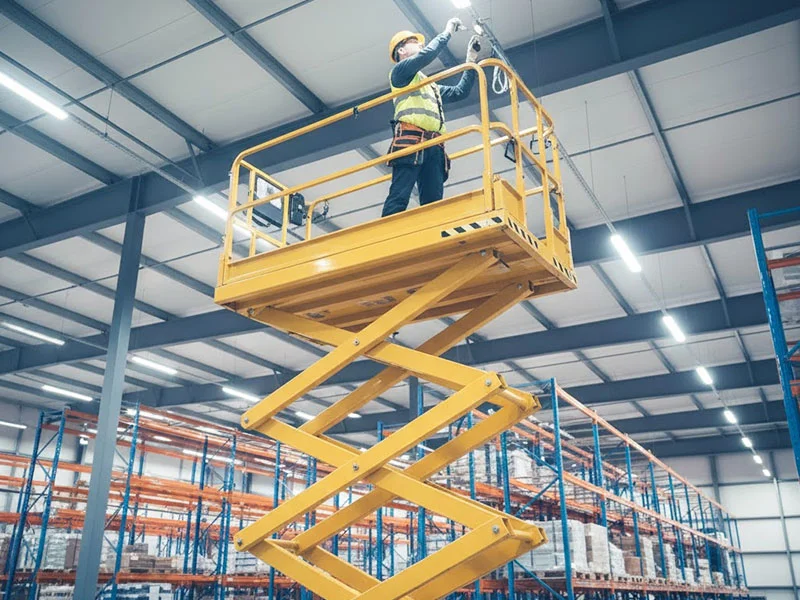
- Scissor Lifts: The scissor lift machine is perfect for tasks requiring a large, level work area that needs to be moved only vertically. They are the workhorses of indoor maintenance, painting, and installation (e.g., installing overhead utilities or lighting in a large warehouse). The simplicity of the scissor lifting machine mechanism offers excellent stability and capacity for a vertical lift machine.
- Boom Lifts: Whether articulating boom lifts (knuckle booms) or telescopic boom lifts (straight booms), these are the go-to aerial lift machines for outdoor construction and maintenance where reach, articulation, and maneuvering around obstacles are necessary. Examples include bridge inspection, tree trimming, exterior painting of complex structures, or accessing elevated power lines. They provide the ultimate versatile access and are a quintessential machine that lifts you up.
Mast Lifts: Compact and Flexible Access
Mast lifts are another sub-category of the lift machine designed for tight spaces and lightweight jobs, often featuring an extending vertical mast that is smaller and lighter than a scissor lift machine. They are frequently used for inventory picking, ceiling maintenance, and other tasks in confined industrial environments.
Conclusion: Choosing the Right Lift System
The distinction between a hoist and a lift machine lies in function and form. The hoist is the ultimate device for suspended, vertical, high-capacity lifting and precision load positioning. The lift machine, encompassing everything from permanent elevators to versatile aerial lift machines, is the solution for supported transportation and elevated access.
To choose the right equipment, you must answer a few simple questions:
- Is the load personnel or materials? If personnel, a dedicated lift machine (elevator, scissor, or boom lift) with appropriate safety features is mandatory.
- Is the movement purely vertical, or does it require horizontal reach? If it requires reaching over or around obstacles, a boom lift machine is necessary. If it’s a simple vertical drop, a hoist or a scissor lift machine may be suitable.
- How will the load be attached? If you need to attach a hook to the top of an object and pull it, a hoist is the answer. If the object (or person) needs to stand on a stable surface, a lift machine is required.
- What is the capacity and duty cycle? Hoists often offer the highest lifting capacity for material handling; the capacity of a lift machine can vary widely but is often lower than the hoist itself.
In many industrial environments, both hoists and various types of lift machines work in tandem—a hoist lifts raw materials from a truck onto a permanent freight lift machine, which then moves it to an upper floor, where a scissor lifting machine is used to position the material for final installation. Understanding the role of each lift machine ensures safe, efficient, and compliant operations.
FAQs
Is an elevator considered a hoist or a lift machine?
An elevator is considered a type of lift machine. While it uses a hoist mechanism (drum, ropes, and motor) to raise and lower the car, the entire assembly—including the car, rails, and comprehensive safety systems—makes it a guided, permanent lift machine designed for personnel and freight transport, not simply a device for suspending a load.
What is an aerial lift machine?
An aerial lift machine is any mobile elevating work platform (MEWP) designed to lift personnel to an elevated working position. This includes scissor lift machines, boom lifts (articulating and telescopic), and vertical mast lifts. They are a category of lift machine focused on access.
Can a hoist move materials horizontally?
A hoist, by itself, only moves vertically. However, a hoist is frequently mounted to a trolley which runs along an overhead beam (part of an overhead crane system). In this configuration, the entire unit allows the suspended load to be moved both vertically (by the hoist) and horizontally (by the trolley/crane).
Is a forklift a lift machine?
Yes, a forklift is considered a specialized type of lift machine. It uses forks and a mast to raise, lower, and transport heavy, supported loads (typically pallets) primarily for stacking and material handling in warehouses and industrial yards.