Choosing the right aerial work platform (AWP) is a critical decision that impacts project efficiency, budget, and, most importantly, safety. Among the most popular AWPs is the scissor lift, a versatile machine known for its large work platform and vertical reach. However, a “one-size-fits-all” approach doesn’t apply here. With a vast range of scissor lift sizes available, understanding the options and the factors that influence your choice is essential.
This comprehensive guide will break down the different types of lifts, detail the common scissor lift sizes, and walk you through the key considerations for selecting the perfect machine for your next job.
Types of Scissor Lifts
Before you even consider scissor lift sizes, you must first select the type of lift best suited for your working environment and power needs. The differences often dictate where the machine can be safely and effectively operated.
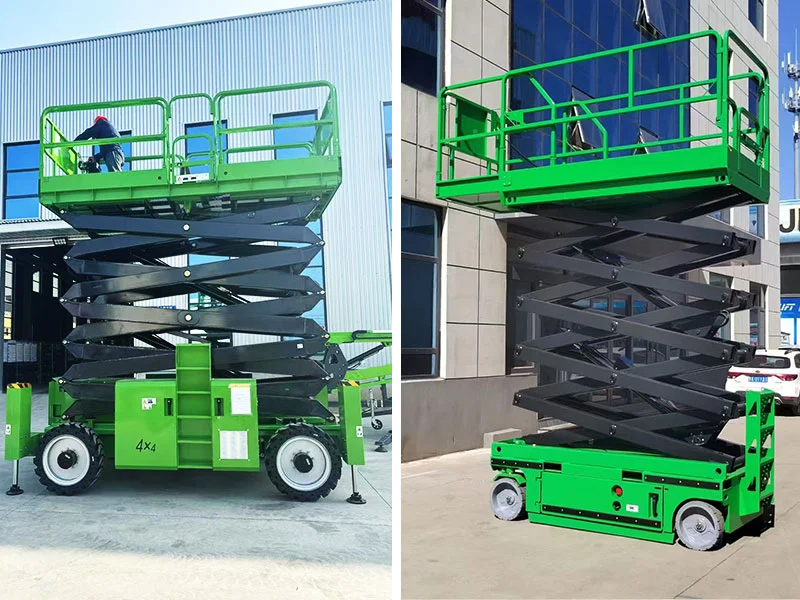
Electric Scissor Lift (Slab Scissor Lift)
The electric or “slab” scissor lift is the industry standard for indoor work.
- Best For: Flat, smooth surfaces like concrete floors in warehouses, retail stores, and indoor construction sites.
- Key Features:
- Zero Emissions: Battery-powered, making them ideal for enclosed spaces with ventilation concerns.
- Quiet Operation: Perfect for noise-sensitive environments like hospitals, offices, or schools.
- Compact Design: Many models are designed with a narrow chassis to fit through standard doorways and navigate tight aisles.
- Tires: Typically equipped with non-marking tires to protect finished floors.
Diesel Scissor Lift
Diesel-powered lifts are heavy-duty machines designed for challenging outdoor environments.
- Best For: Outdoor construction, heavy-duty industrial work, and sites where high load capacity is required.
- Key Features:
- Power: Offer more power and can carry heavier loads than electric models.
- Performance: Excellent for long, continuous runtimes without needing a recharge.
- Emissions and Noise: Produce exhaust fumes and are significantly louder, requiring good ventilation and making them unsuitable for most indoor tasks.
Rough Terrain Scissor Lift
These lifts are specifically engineered to handle uneven, sloped, and rugged job sites. They are often powered by diesel or dual fuel.
- Best For: Construction sites, utility work, exterior maintenance on uneven ground, mud, sand, or gravel.
- Key Features:
- Stability and Traction: Feature four-wheel drive, high-traction, lugged tires, and often have oscillating axles and outriggers for superior stability on difficult terrain.
- Ground Clearance: Higher ground clearance allows them to navigate obstacles and steep grades safely.
- Capacity: Typically designed to handle the largest loads and highest vertical reach among all sizes of scissor lifts.
Hydraulic Scissor Lift
While many electric and diesel lifts use hydraulic systems to raise the platform, the term “hydraulic scissor lift” can also refer to smaller, sometimes stationary, or lightweight manually-propelled units.
- Best For: Specialized industrial applications, lifting heavy material loads in workshops, or fixed-position lifting needs like in an automotive repair bay.
- Key Features: Utilizes the simple principle of pressurized hydraulic fluid to lift the platform.
Scissor Lift Sizes: A Breakdown of Working Heights
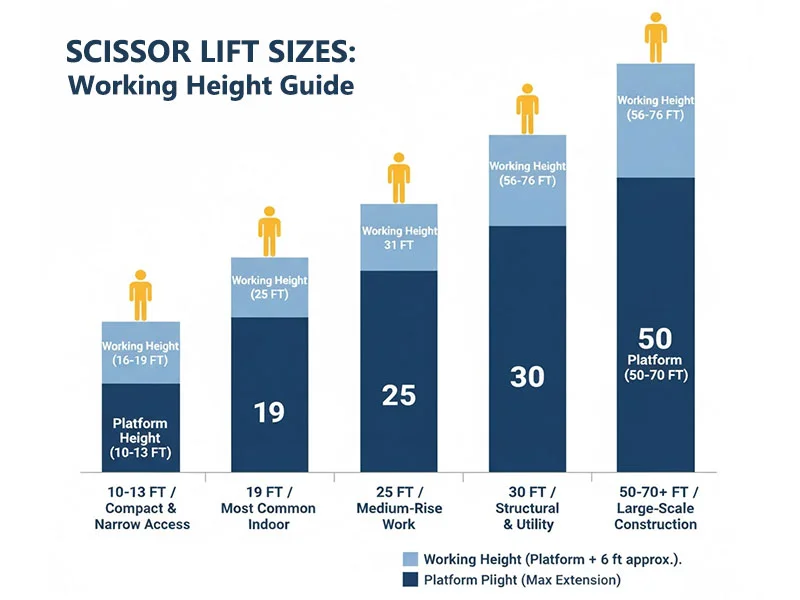
When discussing scissor lift sizes, the primary measurement is the Working Height. It’s important to note the difference between Platform Height and Working Height:
- Platform Height: The maximum height of the platform floor when fully extended.
- Working Height: The platform height plus approximately 6 feet (the average height of a worker’s reach).
For example, a “19-foot scissor lift” has a maximum platform height of 19 feet, giving it a working height of approximately 25 feet. Understanding this distinction is crucial when selecting the correct scissor lift size to ensure your workers can comfortably and safely reach the work area.
Here is a breakdown of the most common standard scissor lift sizes and their typical applications:
10-13-Foot Scissor Lifts
These are the most compact and smallest of the typical working scissor lifts.
- Working Height: Up to 16–19 feet.
- Best For: Warehouse and retail inventory, ceiling work in rooms with standard or slightly raised ceilings, routine facility maintenance, or applications requiring a narrow-access machine.
19-Foot Scissor Lifts
One of the most popular and versatile of the electric scissor lift sizes.
- Working Height: Approximately 25 feet.
- Best For: Indoor electrical, plumbing, HVAC, and sprinkler system work in commercial buildings. Many are narrow enough to travel through single doorways and operate in tight aisles, making them a true mid-size scissor lift champion for interior projects.
25-Foot Scissor Lifts
Offering a bit more reach than the standard indoor models, these are often available in both narrow electric and wider, sometimes diesel-powered, configurations.
- Working Height: Approximately 31 feet.
- Best For: Two- to three-story exterior building maintenance (e.g., window washing, facade repair), general construction, and tasks involving higher industrial shelving.
30-Foot Scissor Lifts
At this range, the lift provides significant vertical access for larger structures.
- Working Height: Approximately 36 feet.
- Best For: Medium-rise construction, major structural work, installing large signs or lighting, and some outdoor utility work. Rough terrain scissor lift sizes start to become more common in this category to support outdoor performance.
50-to-70-Foot Scissor Lift
These are the largest and highest-reaching standard scissor lift sizes.
- Working Height: Up to 56–76 feet.
- Best For: Large-scale commercial and industrial construction, bridge work, high-mast lighting installation, and heavy-duty tasks where maximum height and capacity are essential. These are almost exclusively rough terrain or diesel-powered lifts due to the power and stability required for such heights.
Factors to Consider When Choosing a Scissor Lift
Selecting the right scissor lift size is a multi-faceted decision. It requires a thorough assessment of the job site and the specific work being performed.
Working Height
As discussed, this is the most critical factor. Always select a lift with a working height that is at least a few feet greater than the highest point you need to access. This margin prevents operators from overextending, leaning over guardrails, or placing objects on the rails to gain extra reach, all of which are major safety violations.
Platform Width
The width and length of the platform determine the amount of working space available.
- Narrow Lifts: Ideal for navigating tight corridors, elevators, and standard doorways. The compact nature of these often limits the overall platform size and load capacity.
- Wide Lifts: Offer greater stability and more room for multiple workers, large tools, and bulky materials. This extra space improves productivity by reducing the number of trips up and down. For instance, a 22′ scissor lift work platform size might be ideal for moving sheetrock or long sections of conduit.
Type of Environment
The terrain and location of the work will narrow down the type of lift (and therefore the available scissor lift sizes).
- Indoors/Flat Surface: An electric scissor lift with non-marking tires is the correct choice.
- Outdoors/Rough Terrain: A diesel or dual-fuel rough terrain scissor lift is necessary for stability and power.
- Restricted Space: Consider a narrow-access model or a mini-scissor lift for tight spaces.
Type of Work Task
Consider what the operator will be doing on the platform.
- Maintenance or Inspection: A smaller, highly-maneuverable lift like a 19-foot model may suffice.
- Construction or Installation (Heavy): Tasks like bricklaying, welding, or installing heavy HVAC units will require a lift with a larger platform and a higher load capacity, often leading to a larger scissor lift size in the 30- to 50-foot range.
- Continuous Operation: Diesel lifts are better for long-duration outdoor jobs, while electric models require periodic charging.
Load Capacity
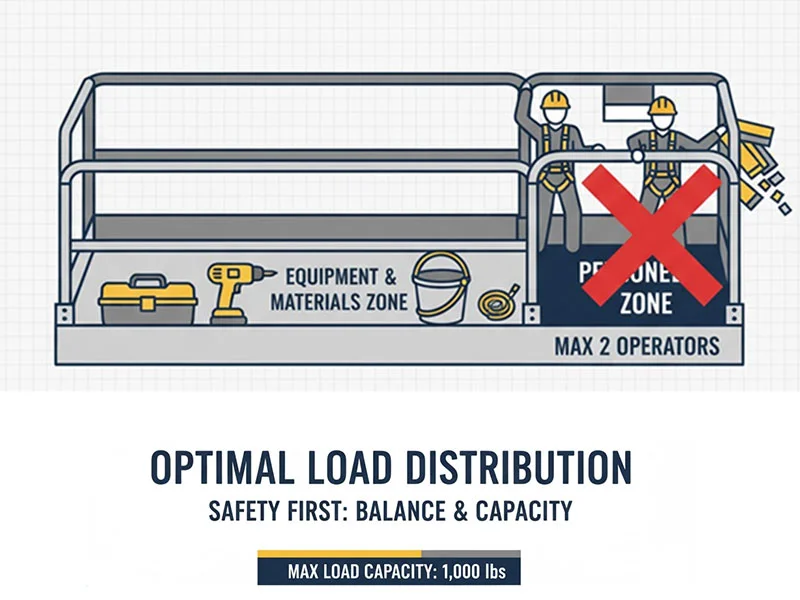
Never exceed the manufacturer’s maximum load capacity, which is clearly marked on the machine. The total load capacity must account for:
- The weight of all personnel on the platform.
- The weight of all tools, materials, and equipment.
Choosing a lift with a sufficient margin above your estimated load is essential for safety and optimal performance. For example, some all-terrain scissor lift sizes can safely carry over 1,500 lbs, while a compact indoor electric model may be rated for 500 lbs.
Scissor Lift Safety
No discussion of scissor lift sizes or operations is complete without a strong focus on safety. Scissor lifts are incredibly safe when used properly, but severe accidents can occur when best practices are ignored.
- Operator Training and Certification: Only personnel who have been properly trained, certified, and authorized should operate a scissor lift.
- Pre-Operation Inspection: A thorough visual and functional check must be performed before every use. This includes checking tires, controls, guardrails, emergency stop buttons, and hydraulic fluid levels.
- Work Area Assessment: Before elevating, ensure the ground is firm and level. Identify and avoid hazards such as potholes, drop-offs, slopes, overhead power lines, and ground debris. OSHA requires a minimum 10-foot clearance from power lines.
- Guardrails and Gates: Ensure all guardrails are fully in place and the platform access gate is properly closed and locked. Never climb on or lean over guardrails to increase reach.
- Load Management: Never exceed the maximum load capacity. The load must be evenly distributed on the platform. Avoid using ladders, step stools, or scaffolding on the platform to increase your reach, as this severely compromises stability.
- Lower Before Moving: Unless the lift is specifically designed to be driven at full height (which is typically only allowed up to certain heights and load capacities), the platform should be fully lowered before driving the machine to a new location.
- Weather Conditions: Do not operate the lift in severe weather, including high winds (generally, wind speeds above 28 mph are considered unsafe) or heavy rain.
Conclusion
Selecting the right machine from the many available scissor lift sizes is a critical step for any elevated work project. By first determining the working environment, then calculating the required working height and load capacity, and finally choosing the appropriate lift type (electric, diesel, or rough terrain), you can ensure maximum safety and project efficiency.
Never compromise on height or capacity. A proper assessment and a commitment to strict safety protocols will ensure your project runs smoothly from the ground up to the highest elevation. If you’re ever in doubt about which scissor lift size is appropriate, consult with a rental or sales professional who can match the machine’s specifications directly to your job site’s requirements.
FAQs
What is the most common scissor lift size?
The 19-foot electric scissor lift is often considered the most common scissor lift size due to its versatility for indoor use, its ability to fit through standard doorways, and its sufficient working height for most indoor commercial and residential tasks (up to approximately 25 feet).
How high can a scissor lift go?
Standard scissor lift sizes typically range up to a platform height of 50 feet, giving a working height of around 56 feet. However, specialized, larger rough terrain models can reach platform heights of 60, 70, or even 80 feet, providing a working height of up to 86 feet for massive construction projects.
Is the platform height the same as the working height?
No. The Platform Height is the measurement from the ground to the floor of the elevated platform. The Working Height is the platform height plus approximately 6 feet (to account for the operator’s average comfortable reach height). When renting or buying, always base your decision on the required Working Height.
Can I use an electric scissor lift outdoors?
Yes, electric scissor lifts can be used outdoors, but only on firm, level, paved, or slab surfaces. They are not designed for rough terrain, slopes, or soft ground. If the terrain is uneven or rugged, an all-terrain scissor lift is required.
What is the difference between a mid-size scissor lift and a mini scissor lift?
A mini scissor lift or “micro” lift is highly compact, often with a platform height under 10 feet. They are designed for incredibly tight access and light tasks. A mid-size scissor lift typically refers to the popular 19-foot to 26-foot lifts, which offer a good balance of height, capacity, and maneuverability for general commercial use.