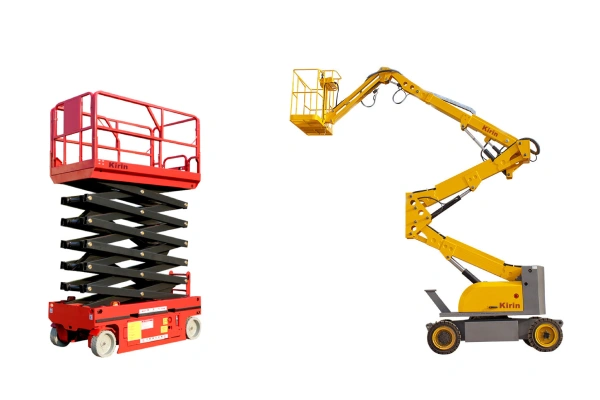
Choosing the right aerial work platform (AWP) is a critical decision for any project that involves working at height. Among the most common and versatile options are scissor lifts, prized for their large platform size and high weight capacity. But once you’ve settled on a scissor lift, you face a second, equally important choice: hydraulic vs. electric scissor lift.
This choice is more than just a matter of preference; it directly impacts your operating costs, noise levels, maintenance schedule, and where the machine can be safely and efficiently used. Will the raw power and resilience of a hydraulic scissor lift suit your rugged outdoor work? Or is the clean, quiet, and efficient operation of an electric scissor lift a better fit for indoor slabs and sensitive environments?
In this comprehensive guide, we’ll delve deep into the mechanics, pros, cons, and ideal applications for both types of lifts. By the end, you’ll have the knowledge to confidently determine which type—the powerful hydraulic or the nimble electric scissor lift—is the perfect machine to elevate your next job. Understanding these differences is key to maximizing efficiency, ensuring safety, and getting the best return on your equipment investment, whether you’re buying or renting an electric lift platform or a heavy-duty hydraulic unit.
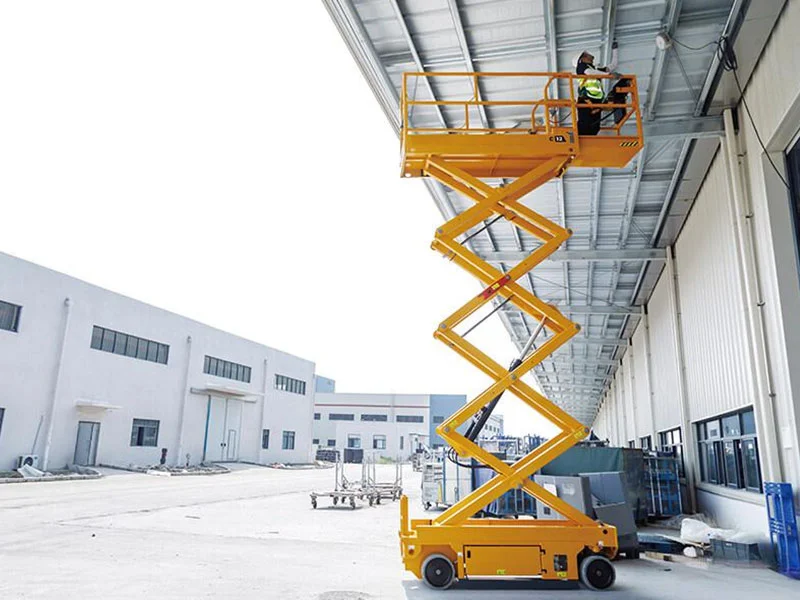
The Hydraulic Scissor Lift: Power and Durability
The hydraulic scissor lift has been the workhorse of the industry for decades. It’s the go-to choice when you need brute strength, high lift capacity, and reliable operation in demanding environments. This type of lift is synonymous with construction sites, uneven terrains, and the kind of heavy lifting that requires robust engineering.
A. Mechanism Overview:
The operation of a hydraulic scissor lift is based on fundamental fluid mechanics—specifically, Pascal’s principle. At its core, the system uses a powerful engine (often a diesel or gasoline combustion engine, but sometimes a high-power electric motor connected to a pump) to drive a hydraulic pump. This pump pressurizes hydraulic fluid, pushing it into one or more large cylinders positioned beneath the scissor mechanism.
The pressurized fluid extends the cylinder’s piston rod, which in turn pushes the crossed supports of the scissor mechanism outward. Because of the mechanical leverage in the scissor assembly, this outward force translates into a vertical lift, raising the platform smoothly and powerfully. To descend, the operator simply releases the pressure, allowing the fluid to return to the reservoir, often in a controlled manner via a valve, which is a key safety feature of the scissor lift hydraulic system. This system is exceptionally powerful, making the hydraulic scissor lift table ideal for heavy loads.
B. Key Advantages (Pros):
- Superior Lift Capacity: Hydraulic systems are inherently powerful. They can generate massive forces, allowing hydraulic scissor lifts to lift significantly heavier loads than most equivalent electric scissor lifts. This is crucial for transporting multiple workers, large tools, and heavy materials like steel beams or large sheets of glass.
- Extended Duty Cycles: A diesel-powered hydraulic scissor lift can run and work continuously as long as it has fuel. This is a massive advantage on large, long-duration projects where downtime for recharging is simply not an option.
- Durability and Longevity: The components—steel cylinders, pumps, and combustion engines—are designed for high stress and challenging conditions. They can withstand abuse and operate reliably in extreme heat or cold better than sensitive battery packs found in an electric platform lift.
C. Key Disadvantages (Cons):
- Noise and Emissions: The most significant drawback is the noise produced by the combustion engine. This makes them unsuitable for indoor use (unless in a very well-ventilated space) or in noise-sensitive areas like residential zones, hospitals, or occupied office buildings. The exhaust emissions also rule them out for any unventilated indoor work.
- Higher Maintenance Requirements: A hydraulic scissor lift with a combustion engine requires regular engine maintenance: oil changes, filter replacement, spark plugs, coolant, and general tune-ups. The hydraulic fluid, hoses, and seals also require periodic inspection and replacement. This translates to higher overall long-term maintenance costs.
- Larger Footprint and Weight: Due to the engine, fuel tank, and heavy-duty components, hydraulic lifts are typically larger and much heavier than an equivalent electric platform lift. This makes transport more difficult and limits their use on sensitive indoor flooring that has strict weight limits.
- Fuel Costs: They rely on expensive diesel or gasoline, which is a continuously recurring operational cost, especially over a long project lifetime.
- Potential for Hydraulic Leaks: While durable, the hydraulic system always carries the risk of a fluid leak, which can contaminate a worksite, pose a slip hazard, and necessitate immediate repair.
D. Best Use Cases:
- Heavy-Duty Construction: Sites requiring lifts that can handle masonry, steel work, and multiple tradespeople plus materials.
- Outdoor and Rough Terrain: Any job on unpaved surfaces, uneven ground, or slopes, such as bridge maintenance or highway construction.
- Industrial Maintenance: Facilities that require high lift capacities for large machinery repair or installation in open, well-ventilated areas.
- Long-Duration Projects: Jobs where continuous, all-day operation without recharging is critical.
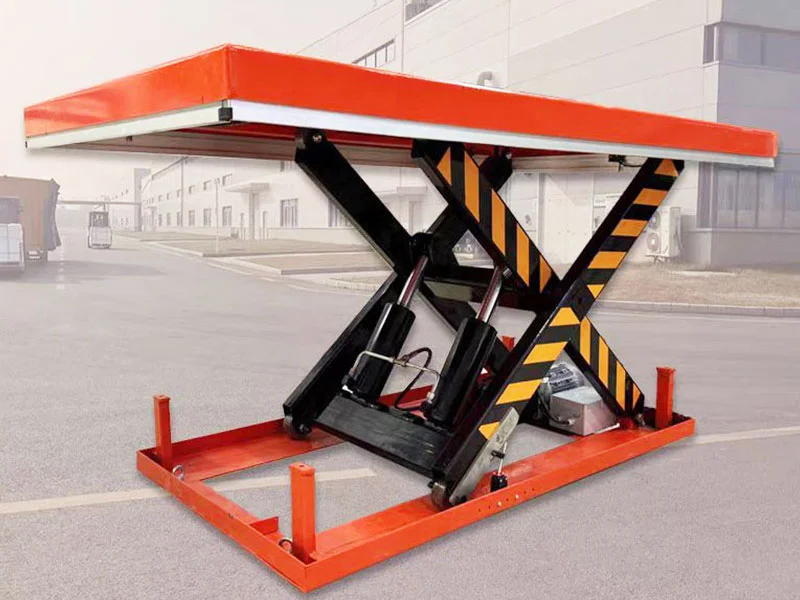
Deep Dive: The Electric Scissor Lift
The electric scissor lift has rapidly gained market share, particularly for indoor and maintenance work. As battery technology improves and environmental standards become stricter, the demand for the clean, efficient power of the electric scissor lift continues to climb.
A. Mechanism Overview:
The electric scissor lift operates on the same mechanical principle as its hydraulic counterpart—the criss-crossing scissor arms—but the motive power source is completely different. Instead of a combustion engine and pump, the electric lift platform utilizes large, deep-cycle rechargeable batteries (typically lead-acid or, increasingly, lithium-ion).
These batteries power one or more quiet electric motors. The lift motor drives a hydraulic pump, which pressurizes the fluid to extend the lifting cylinders, just like the non-electric model, but without the loud engine. This means that while it is an electric scissor lift, the actual lifting mechanism is still often hydro-electric—it uses electric power to drive a hydraulic system.
However, newer, purely mechanical or screw-drive electric scissor lifts are also becoming available, eliminating the need for hydraulic fluid altogether for the lift function, making them the ultimate clean-operation machine. The drive wheels are typically powered by separate, efficient electric motors. A battery charger is built into the machine, allowing it to be plugged into a standard wall socket for overnight recharging. This combination of quiet, battery-powered operation makes the electric scissor lift table a preferred tool for interior work.
The clean operation of this machinery makes the electric scissors lift a favorite for facility managers. The modern electric scissor lift is engineered for maximum energy efficiency, maximizing the uptime from each charge cycle.
B. Key Advantages (Pros):
- Zero Emissions and Quiet Operation: This is the flagship advantage. The electric scissor lift produces no harmful exhaust and operates with a minimal whirring sound. This makes it mandatory for indoor work, food processing plants, clean rooms, and occupied buildings where air quality and noise are major concerns.
- Low Maintenance: Without a combustion engine, the vast majority of maintenance associated with oil changes, filters, and spark plugs is eliminated. Maintenance is primarily focused on the batteries, the electric motors, and the hydraulic fluid/hoses (if applicable). This translates directly into lower long-term operating costs and less downtime.
- Compact Size and Low Weight: Electric scissor lifts are generally narrower and lighter than hydraulic models with comparable platform heights. This compact size allows them to navigate narrow aisles, pass through standard doorways (especially narrow-aisle models), and be used on weight-restricted flooring, such as elevated concrete slabs in office buildings.
- Precise Control: Electric drive motors often offer smoother, more precise speed control and proportional lifting/lowering capabilities, which is highly desirable for delicate placement tasks or navigating tight spaces.
- Cost-Effective Operation: The cost of recharging batteries overnight is significantly lower than the cost of fueling a diesel engine every day. This ongoing saving makes the electric scissor lift highly economical over its lifespan. Furthermore, the simple nature of the electric scissor lift table ensures fewer breakdowns.
C. Key Disadvantages (Cons):
- Limited Duty Cycle (Battery Life): The primary limitation is the battery. Depending on the usage intensity, an electric scissor lift may only run for a single shift (8 hours) before needing a full recharge, which can take hours. This makes multi-shift or non-stop operation challenging without swapping batteries (if possible) or having multiple units.
- Lower Lift Capacity: While capacities are constantly improving, most electric scissor lifts have a lower maximum weight capacity compared to the largest rough-terrain hydraulic models. They are best suited for personnel and tools, not massive material loads.
- Outdoor/Terrain Limitations: The tires are often non-marking (white or grey) and designed for smooth, slab surfaces. While some heavy-duty electric scissor lifts exist, they generally struggle with deep mud, significant slopes, and very uneven, unpaved terrain. Rain or exposure to the elements can also be more damaging to electrical components than a hydraulic engine block.
- Cold Weather Performance: Batteries lose capacity in cold temperatures, which can significantly shorten the available run-time of the electric scissors lift in winter months.
D. Best Use Cases:
- Indoor Slab Work: Warehouses, data centers, retail spaces, schools, hospitals, and any finished flooring where clean, non-marking tires and zero emissions are required.
- Facility Maintenance: Day-to-day work in occupied buildings where quiet operation is paramount.
- Environmentally Sensitive Areas: Clean rooms, food production facilities, and aerospace manufacturing, where contamination is a strict concern.
- Tight Spaces: Narrow electric platform lift models are ideal for fitting through standard single and double doorways and working in confined aisles.
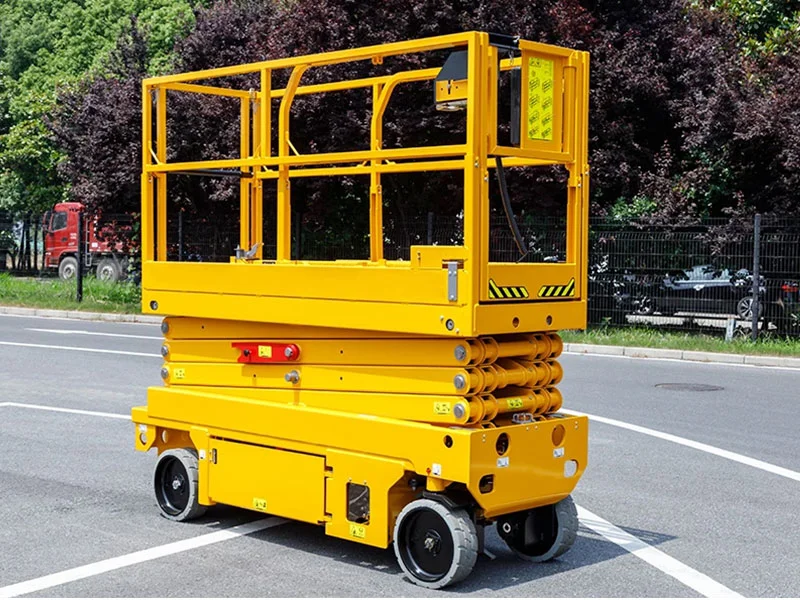
Side-by-Side Comparison: Making the Decision
| Feature | Hydraulic Scissor Lift (Rough Terrain/Engine Powered) | Electric Scissor Lift (Slab/Battery Powered) |
| Power Source | Diesel, Gasoline, or LPG Engine | Rechargeable Deep-Cycle Batteries |
| Emissions | High (Exhaust) | Zero |
| Noise Level | High | Low/Negligible |
| Ideal Environment | Outdoor, Rough Terrain, Open Air | Indoor, Flat Slab, Quiet Areas |
| Maintenance | High (Engine, Filters, Oil, Hydraulics) | Low (Battery, Motors, Basic Hydraulics) |
| Operating Cost | High (Fuel) | Low (Electricity) |
| Lift Capacity | Very High (Often Superior) | Moderate to High (Less than top-tier hydraulic) |
| Duty Cycle | Continuous (As long as fuel is available) | Limited (Typically one shift per charge) |
| Size/Weight | Larger and Heavier | More Compact and Lighter |
| Cost | Generally Higher Initial Purchase Price | Generally Lower Initial Purchase Price |
The choice hinges on location and power. If your primary work is outside on challenging ground, the raw power and long-running capacity of the scissor lift hydraulic unit is irreplaceable. However, if your business is primarily indoor fit-outs, maintenance, or warehousing, the efficiency, cleanliness, and cost savings of the electric scissor lift make it the clear winner. The proliferation of the electric scissor lift in modern facilities speaks volumes about its utility.
For many companies, the ideal scenario is a mixed fleet: large, heavy-duty hydraulic lifts for site development, and multiple electric scissor lifts for the finishing and interior work.
Which Type of Scissor Lift is Better for You?
The “better” machine is the one that aligns best with your specific job parameters, environment, budget, and logistical requirements. The decision is simplified by answering a few key questions:
1. What is Your Work Environment?
- If it’s primarily ROUGH TERRAIN (mud, dirt, gravel, slopes) and OUTDOORS: You need the greater power, and stability of a hydraulic scissor lift. The emissions and noise are less of a concern outside.
- If it’s primarily INDOORS (warehouses, offices, concrete slabs) or SENSITIVE LOCATIONS: You absolutely need the zero emissions and non-marking tires of an electric scissor lift. The noise and exhaust of a hydraulic model are often prohibited.
2. What is the Weight and Height Requirement?
- If you need to lift over 1,500 lbs. or reach extreme heights: You will likely need a heavy-duty, engine-powered hydraulic scissor lift (though check the specifications for modern, high-capacity electric lift platform models).
- If your loads are personnel, tools, and lighter materials (under 1,000 lbs.): An electric scissor lift will almost certainly be sufficient and more cost-effective.
3. What is Your Budget and Long-Term Cost View?
- If you prioritize the lowest possible ongoing operational costs: The lower fuel costs and reduced maintenance of the electric scissor lift make it the clear winner over the lifespan of the machine.
- If you prioritize continuous, uninterrupted operation regardless of fuel cost: The hydraulic model’s ability to run all day with a simple refuel is an advantage that electricity can’t match without battery swapping or significant downtime.
The Rise of the Electric Scissor Lift
It’s crucial to note the rapid advancements in electric scissor lift technology. Lithium-ion batteries are beginning to replace traditional lead-acid, offering faster charging, longer run times, and lighter weight. Furthermore, some high-capacity electric scissor lifts are now engineered with features like oscillating axles and rugged tires, blurring the line between the traditional “slab” electric lift platform and the “rough terrain” hydraulic unit. These new generation electric scissor lifts are powerful, versatile, and represent the future of aerial work platforms.
For the vast majority of non-extreme applications (under 40 ft. height and on paved/slab surfaces), the electric scissor lift offers the best blend of features: low cost, clean operation, and high reliability. The sheer volume of applications where an electric scissor lift excels, from stock-picking in a warehouse to installing ceiling tiles in a hotel, makes it an indispensable tool.
Conclusion
The choice between a hydraulic scissor lift and an electric scissor lift is ultimately a business decision based on the location and nature of the work.
For jobs that demand maximum muscle, continuous run time, and the ability to conquer rugged outdoor landscapes, the robust hydraulic scissor lift is still the champion. Its raw power and durability justify the higher costs of fuel and maintenance.
However, for the majority of modern construction, maintenance, and facility management work, the electric scissor lift is the superior, more future-proof investment. Its quiet operation, zero emissions, minimal maintenance, and lower long-term operating costs offer a compelling value proposition that aligns perfectly with today’s demands for efficiency and environmental responsibility. By carefully assessing your needs against the detailed advantages and disadvantages we’ve covered, you can select the machine—the powerful scissor lift hydraulic or the efficient electric scissor lift—that will safely and effectively elevate your productivity.
FAQs
Can an electric scissor lift be used outside?
Yes, many electric scissor lifts can be used outdoors, especially on flat, paved surfaces like parking lots or sidewalks. However, standard slab-style electric scissor lifts should generally be kept off rough terrain (mud, deep gravel) and should not be operated in heavy rain, as the electrical components are more sensitive than a hydraulic lift’s engine. Specialized rough-terrain electric platform lift models are designed to handle slightly more challenging outdoor conditions.
Is a hydraulic scissor lift always better for heavy loads?
Historically, yes. The high-end hydraulic scissor lift with a powerful engine and large cylinders still typically offers the highest load capacities (e.g., over 2,000 lbs.) compared to a similarly sized electric scissor lift. However, the gap is closing, and modern, heavy-duty electric scissor lifts often offer capacities that are more than adequate for most job sites (e.g., up to 1,500 lbs.).
How much longer does an electric scissor lift last on a single charge?
The run time of an electric scissor lift varies significantly based on battery type (lead-acid vs. lithium-ion), battery age, and usage intensity. Under typical use (a mix of driving and lifting), most new electric scissor lifts are designed to last a full 8-hour shift. Continuous, heavy lifting and driving will drain the battery faster. It’s a key logistical factor when planning for multi-shift work.
Are there hybrid scissor lifts?
Yes. Some manufacturers offer hybrid scissor lifts, which combine a small diesel engine with a battery pack. These lifts can operate in full-electric, zero-emission mode when indoors or near-silent operation is required, or they can switch to the diesel engine for driving/charging outdoors and for continuous runtime, offering the best of both the electric scissor lift and hydraulic scissor lift worlds.
What is the main maintenance difference between a hydraulic and electric scissor lift?
The main difference is the engine vs. the battery. A hydraulic scissor lift (engine-powered) requires standard engine maintenance: oil changes, air and fuel filter replacements, coolant checks, and spark plug service. An electric scissor lift requires significantly less; the focus shifts to battery maintenance (checking water levels in lead-acid batteries, ensuring proper charging cycles) and less frequent motor/hydraulic system checks.