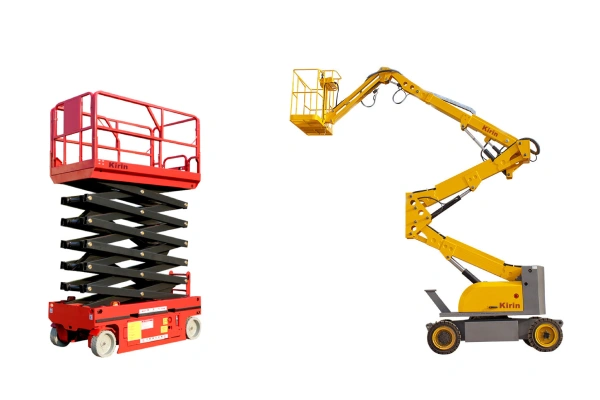
In the world of elevated work, efficiency and safety are paramount. While large-scale construction often calls for heavy-duty equipment like massive boom lifts or expansive scissor lifts, there is a specialized niche for precision, agility, and indoor use. This is where the vertical mast boom lift excels.
The vertical mast boom lift, also commonly referred to as a vertical mast lift, is a highly specialized piece of aerial work platform (AWP) equipment. It has revolutionized the way professionals approach tasks in tight quarters and on delicate indoor flooring. Offering a compact alternative to its bulkier cousins, this lift is designed to get personnel, tools, and materials precisely where they need to be, often in places traditional lifts simply cannot access. Understanding the design, benefits, and applications of the vertical mast boom lift can be a game-changer for maintenance, retail, and facility management operations.

Core Definition and Mechanism
A. What is a “Vertical Mast Boom Lift”?
A vertical mast boom lift is a type of aerial work platform that elevates a work platform using a vertical telescoping mast. Unlike a traditional boom lift, which uses an articulating or telescopic arm that extends horizontally or at an angle, the vertical mast lift’s primary movement is straight up and down from its base.
The term “boom” is often included in the name because some models of the vertical mast boom lift include a small, articulating jib or “boom” extension at the top of the mast. This small extra arm allows the operator to reach out and over minor obstructions, providing a crucial bit of horizontal outreach that the purely vertical design of a basic mast lift lacks. This combination of a slender vertical mast for height and a small boom for outreach defines the versatile vertical mast boom lift.
B. Primary Function:
The main function of the vertical mast boom lift is to provide safe, direct, vertical access for one or two workers and their tools to elevated areas. It is engineered for tasks that require a person to be positioned immediately above the equipment, often reaching heights between 20 to 40 feet, though some models can go higher.
C. Key Components:
Understanding the parts of the vertical mast boom lift highlights its simple yet effective design:
- Mast: The central, telescoping column (or dual columns) that extends vertically. It is the backbone of the machine, guiding the platform straight up.
- Operator Platform (Basket): The small, caged area at the top where the worker stands. It features guardrails and harness anchor points for safety. Many platforms can also be extended a short distance to increase the working area.
- Base (Chassis): The solid, stable bottom structure that houses the power source, controls, and wheels. It’s designed to have a small footprint for navigating tight spaces.
- Lifting Mechanism: Typically a hydraulic or electromechanical system that powers the vertical movement of the mast. Electric-powered models are common for quiet, indoor use.
- Ground and Platform Controls: Controls are provided both on the base for setup and emergency lowering, and on the platform itself for the operator to precisely maneuver the lift at height.
- Jib/Boom (on “Boom” models): The short, non-rotating articulated extension at the top of the mast that provides a small horizontal reach.

Key Advantages and Benefits
The vertical mast boom lift has carved out a unique space in the aerial work platform market due to its specific design advantages.
A. Compact Size and Maneuverability:
This is the most significant advantage. A vertical mast boom lift is considerably slimmer than a scissor lift and has a smaller overall footprint than most boom lifts. This compact design allows it to:
- Fit through standard single or double doorways (often with a width as narrow as 30 inches).
- Navigate narrow aisles in warehouses and retail environments where bulkier equipment would be impossible to use.
- Be easily stored in small spaces when not in use.
Its small size, combined with tight turning capabilities (often zero-turn steering on self-propelled models), makes it incredibly agile.
B. Precision Placement:
Since the lift only moves vertically from its base (with only the small jib offering lateral movement), positioning is incredibly precise. The operator simply drives the vertical mast boom lift directly beneath the work area and raises the platform. This makes it ideal for highly targeted tasks like ceiling light replacement, smoke detector maintenance, or detailed overhead installation where accurate positioning is critical.
C. Non-Marking Tires & Indoor Use:
Most vertical mast boom lift models are battery-electric powered. This means they are quiet and emission-free, making them perfect for sensitive indoor environments like hospitals, offices, retail stores, and food processing plants. Furthermore, they are typically fitted with non-marking tires to protect finished flooring, tile, and polished concrete surfaces from damage. This is a critical factor for facilities and maintenance managers concerned with preserving the aesthetics and integrity of their buildings.
D. Efficiency:
The straightforward operation of a vertical mast boom lift contributes to high efficiency. It requires minimal setup time—unlike scaffolding—and the controls are intuitive. For common tasks like routine facility maintenance, which often involves short bursts of work at various heights, the quick deployment and repositioning of a self-propelled vertical mast boom lift significantly reduce overall project time compared to using ladders or push-around models. This type of lift is an efficient solution for a variety of tasks.
Common Applications of the Vertical Mast Boom Lift
The unique characteristics of the vertical mast boom lift make it the preferred equipment across numerous industries for a variety of tasks:
| Industry/Setting | Common Applications | Key Benefit |
| Retail & Malls | Hanging signs, decorating, inventory access on high shelves, light fixture maintenance. | Compact size fits easily within shopping aisles and non-marking tires protect floors. |
| Warehousing & Logistics | High-level stock picking, inspecting inventory, servicing HVAC, fire suppression, and sprinkler systems. | Navigates narrow aisles and provides direct access to high racking. |
| Facility & Building Maintenance | Changing high ceiling lights, repairing ventilation systems, ceiling tile replacement, painting overhead trim. | Quiet, emission-free operation for use during business hours without disruption. |
| Aviation | Aircraft maintenance (cockpit and engine access), cleaning inside hangars. | Precision and maneuverability around valuable equipment in confined hangar spaces. |
| Theaters & Venues | Setting up stage lighting, adjusting speakers, hanging banners and backdrops. | Small footprint ensures it doesn’t obstruct seating or traffic flow during setup. |
| Historical Buildings | Restoration work on high ceilings and delicate interior architecture. | Lightweight and compact, minimizing structural stress on older, sensitive floors. |
Comparing Mast Lifts to Other Equipment
Choosing the right aerial work platform (AWP) depends on the job. The vertical mast boom lift fits a distinct operational sweet spot compared to its main competitors:
| Equipment Type | Primary Movement | Footprint & Reach | Best Suited For |
| Vertical Mast Boom Lift | Straight vertical with a small horizontal jib extension. | Very compact base; excellent for tight indoor spaces. | High precision, low-level to mid-level heights in confined areas. The vertical mast boom lift is unbeatable for agility. |
| Scissor Lift | Straight vertical, like a large elevator. | Wide platform; requires more ground space but offers a larger work area. | Tasks requiring multiple workers, heavy loads, and wide, direct overhead access. |
| Articulating/Telescopic Boom Lift | Angular and horizontal reach (up and out), often with 360-degree rotation. | Large footprint; designed for outdoor and rough terrain. | Reaching over obstacles, extreme heights, and areas with limited direct ground access. |
The key takeaway is that when the work is directly overhead and space is a limiting factor, the agility and compact nature of the vertical mast boom lift make it the superior choice over a wide scissor lift or a large outdoor boom lift.
Safety and Operation Essentials
Safety must always be the top priority when operating any aerial work platform, including the vertical mast boom lift. Adherence to best practices and manufacturer guidelines is non-negotiable.

Key Safety Features:
Modern vertical mast boom lift models are equipped with multiple features to ensure operator safety:
- Guardrails and Toe Boards: A stable barrier around the platform to prevent falls.
- Tilt Sensors: These automatically warn or prevent the mast from extending if the machine is on an unlevel surface, significantly reducing the risk of tip-overs.
- Overload Protection (Load Sensing): Prevents operation if the weight limit (personnel and tools) is exceeded.
- Emergency Stop and Descent Controls: Buttons available both on the platform and at the ground level to immediately halt all movement or safely lower the operator in an emergency.
- Harness Anchor Points: Designated points for the operator to attach a fall arrest lanyard, especially important on any vertical mast boom lift that extends past the mast.
- Automatic Braking System: Engages automatically when controls are released or power is lost.
Operational Precautions:
- Operator Training: All operators must receive proper, certified training on the specific vertical mast boom lift model they will be using.
- Pre-Operation Inspection: A thorough walk-around inspection must be performed before every use, checking hydraulics, electrical systems, tires, controls, and safety devices.
- Site Assessment: Always survey the work area for level ground, overhead obstructions (like wires or ducts), and floor capacity. Never operate the vertical mast boom lift on slopes or soft ground that exceed manufacturer limits.
- Load Limits: Never exceed the maximum platform capacity rating for the specific vertical mast boom lift.
- Fall Protection: Always use the required personal fall arrest system (harness and lanyard) attached to an approved anchor point, even within the guardrails, as mandated by safety regulations.
Conclusion
The vertical mast boom lift is an indispensable tool for a wide range of industries, offering a unique blend of height access, compact maneuverability, and precision. Its ability to navigate narrow corridors and operate quietly indoors makes it the ideal choice for maintenance and installation professionals in retail, warehousing, and commercial facility management. By understanding its mechanism and adhering to strict safety protocols, the vertical mast boom lift ensures that elevated work is completed not just efficiently, but above all, safely.
FAQs
Is a “vertical mast lift” the same as a “vertical mast boom lift”?
They are very similar, and the terms are often used interchangeably. Technically, a standard vertical mast lift only moves straight up and down. A vertical mast boom lift is a version that includes a small jib or articulating arm (a “boom”) at the top of the mast, giving it a crucial bit of horizontal reach over obstacles.
What is the average working height of a vertical mast boom lift?
Most models offer working heights between 20 to 40 feet (6 to 12 meters), which is ideal for the vast majority of indoor and mid-level facility maintenance tasks.
Can a vertical mast boom lift be used outdoors?
Yes, many models are rated for outdoor use, but they must only be operated on firm, level ground and generally only in low wind conditions, as specified by the manufacturer. They are not typically designed for rough terrain like larger, diesel-powered boom lifts.
Are vertical mast boom lifts safe?
When properly operated by a trained and certified professional, and when all safety checks and site requirements are met, they are extremely safe. Their design—moving mostly straight up and having a low center of gravity—makes them very stable. Safety features like tilt sensors, guardrails, and emergency controls are standard.
How does a vertical mast boom lift compare to a ladder for facility maintenance?
A vertical mast boom lift is vastly superior and safer. It provides a stable, protected platform for the worker, allows tools to be carried up easily, and eliminates the high risk of falling associated with ladder work. For tasks requiring prolonged time at height, the lift is the only truly safe and ergonomic option.