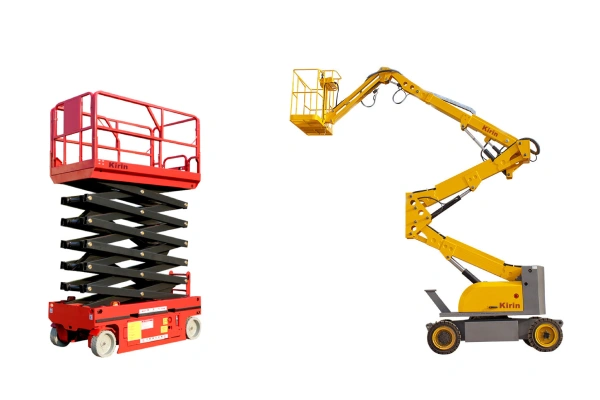
When it comes to working at height, a stable and reliable platform is non-negotiable. But what happens when the ground you’re working on isn’t flat and smooth? That’s where the all-terrain boom lift comes in. These rugged, versatile machines are designed to provide unparalleled access in the most challenging environments.
In this ultimate guide, we’ll cover everything you need to know about all-terrain boom lifts, from their essential features to their common applications and key safety considerations.
Reaching New Heights on Any Ground
Imagine a construction site with muddy slopes, a utility project in a remote, undeveloped area, or a tree trimming job on a residential lawn with uneven terrain. A standard boom lift would struggle, if not fail entirely, to navigate these conditions safely. The beauty of an all-terrain boom lift is that it’s built specifically for these situations. It’s the ultimate solution for reaching new heights, no matter what the ground beneath you looks like.
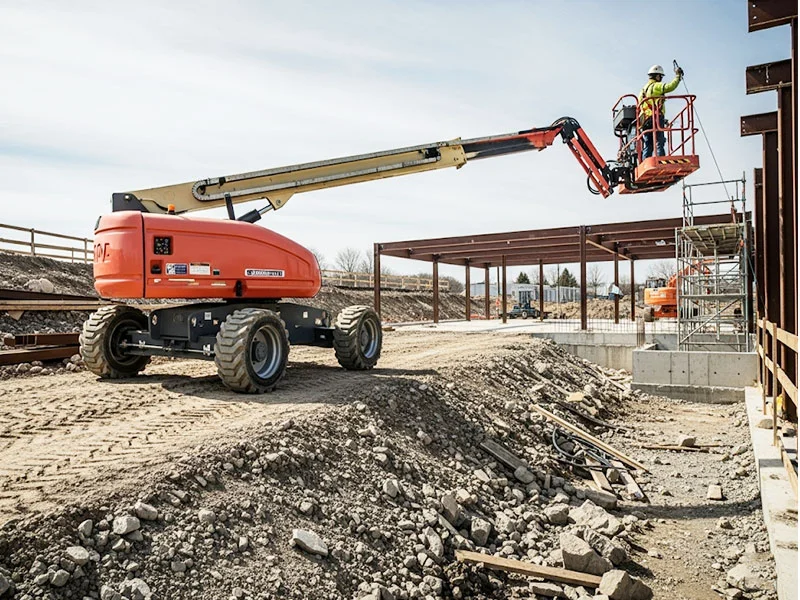
What Exactly is an All-Terrain Boom Lift?
An all-terrain boom lift, also commonly referred to as a rough terrain boom lift, is a type of aerial work platform (AWP) designed to operate on challenging and uneven ground. Unlike their slab-based counterparts, these machines feature robust tires, powerful engines, and advanced drive systems that allow them to traverse mud, sand, gravel, and inclines with ease. The key differentiator is their ability to maintain stability and provide a safe working platform even when the ground is far from perfect.
Types of All-Terrain Boom Lifts
All-terrain boom lifts come in a variety of configurations, each suited for different tasks:
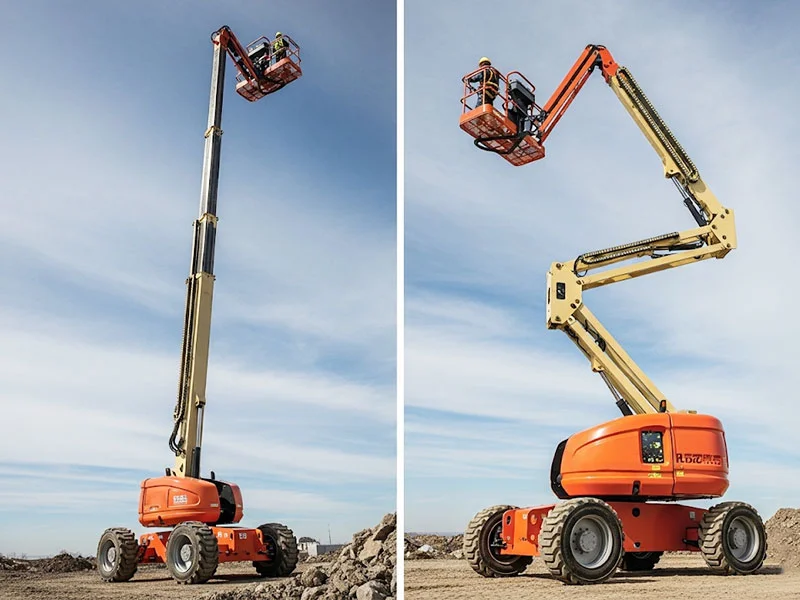
- Telescopic Boom Lifts: Known for their straight, extendable arm, these lifts offer a longer reach and higher platform capacity. A telescopic all-terrain boom lift is ideal for jobs that require reaching over obstacles or accessing great heights from a single, stationary position.
- Articulating Boom Lifts: Featuring a jointed arm (or “knuckle”), these lifts provide greater flexibility to maneuver around obstacles. An articulating rough terrain boom lift is the perfect choice when you need to access tight spaces or work in congested areas with multiple obstructions.
What is the best lift for uneven ground?
The best lift for uneven ground is unequivocally an all-terrain boom lift. Their specific design, featuring four-wheel drive, oscilating axles, and high-traction tires, makes them far superior to standard lifts on challenging surfaces. While other lifts may attempt to compensate with outriggers, a purpose-built rough terrain boom lift is engineered from the ground up to handle slopes and varying ground conditions safely and effectively.
Will a scissor lift work on uneven ground?
While some scissor lifts are designed for rough terrain, they are not a direct substitute for a boom lift. A rough terrain scissor lift is equipped with a wider base and more aggressive tires than a standard model. However, their primary function is to lift workers straight up. On very uneven or sloped ground, a scissor lift can become unstable and is not recommended. For jobs requiring horizontal outreach or significant height on truly challenging terrain, a specialized all-terrain boom lift is the only safe and reliable option.
Essential Features of a True All-Terrain Machine
When evaluating a potential all-terrain boom lift, look for these crucial features:
- Four-Wheel Drive: Provides superior traction and power distribution.
- Oscillating Axles: Allows the wheels to pivot independently, keeping all four tires on the ground for maximum stability on uneven terrain.
- High-Ground Clearance: Prevents the undercarriage from getting stuck or damaged.
- Rough-Terrain Tires: Deep tread and wide construction offer excellent grip in mud, sand, and gravel.
- Robust Engine: A powerful engine is essential for navigating inclines and difficult ground.
Common Applications and Industries
The versatility of the all-terrain boom lift makes it an indispensable tool across many industries, including:
- Construction: Structural steel erection, roofing, and general construction on undeveloped sites.
- Telecommunications & Utilities: Installing and maintaining power lines, cell towers, and communication infrastructure in remote locations.
- Forestry & Arboriculture: Tree trimming and removal in forests or on sloped residential properties.
- Oil & Gas: Maintenance and inspection of rigs and pipelines in rugged landscapes.
- Mining: Accessing machinery and conducting inspections in quarries and mines.
Renting vs. Buying: Making an Informed Decision
Deciding whether to rent or buy an all-terrain boom lift depends on several factors:
- Frequency of Use: If your company uses an all-terrain boom lift regularly for multiple projects, buying might be a smart long-term investment.
- Project Specifics: For a one-time job or a short-term project, renting is more cost-effective.
- Budget: Buying involves a significant upfront cost, plus ongoing maintenance and storage. Renting provides flexibility and predictable costs.
Key Safety Considerations
Operating any aerial lift requires strict adherence to safety protocols. When using an all-terrain boom lift, pay special attention to:
- Ground Conditions: Always inspect the work area for soft spots, holes, and hidden obstacles.
- Weather: Wind and rain can significantly affect stability and should be carefully monitored.
- Operator Training: Ensure all operators are properly certified and trained on the specific model of all-terrain boom lift they will be using.
- Pre-Operation Inspection: Conduct a thorough check of all components, including tires, brakes, fluid levels, and emergency controls, before each use.
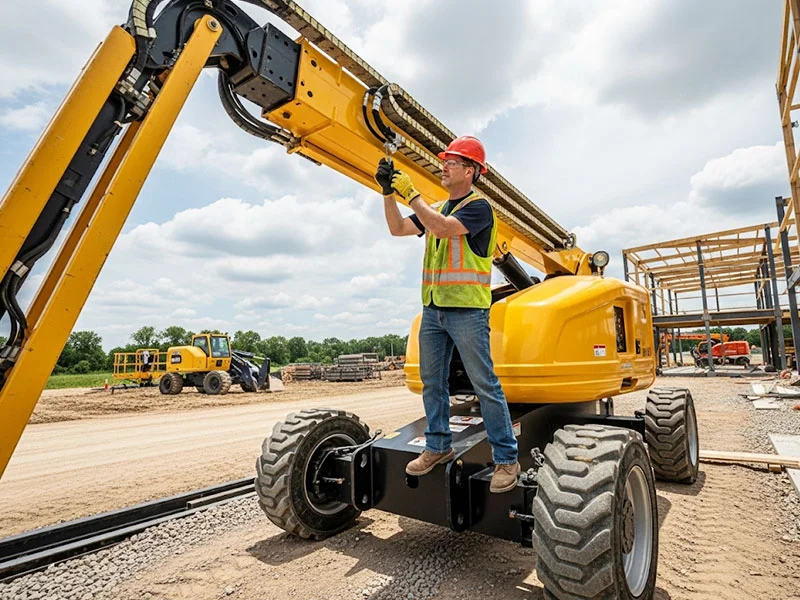
Conclusion: The Right Tool for the Toughest Jobs
The all-terrain boom lift is more than just a piece of equipment; it’s a solution to a complex problem. Its ability to provide safe, stable, and reliable access on any terrain makes it an invaluable asset for professionals in construction, utilities, and many other industries. When your job site is anything but flat, the all-terrain boom lift is the right tool to get the job done safely and efficiently.
FAQs
Q: What is the difference between a rough terrain boom lift and a standard boom lift?
A: The main difference is the design for a specific environment. A rough terrain boom lift has four-wheel drive, high-traction tires, and oscillating axles for navigating uneven ground, while a standard boom lift is built for use on flat, paved surfaces.
Q: Can an all-terrain boom lift be used on paved surfaces?
A: Yes, an all-terrain boom lift can be used on paved surfaces. However, due to their weight and aggressive tires, they may leave marks or cause damage to delicate surfaces.
Q: What is the maximum height an all-terrain boom lift can reach?
A: The maximum height varies greatly by model. Some of the largest telescopic all-terrain boom lift models can reach heights of over 185 feet.