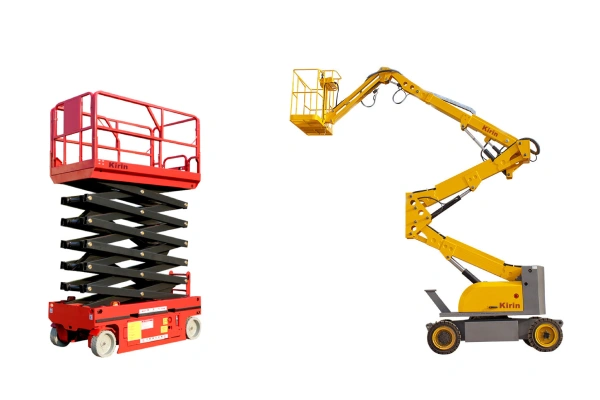
A self-propelled boom lift is a type of aerial work platform (AWP) that can move around a job site without needing to be pushed or towed by another vehicle. It’s designed to lift workers, tools, and materials to elevated positions, providing a safe and stable platform for a variety of tasks at height. These lifts are essential in many industries, from construction to facility maintenance, due to their impressive reach and maneuverability.
Understanding Self-Propelled Boom Lifts
A self-propelled boom lift is a machine that uses a hydraulic system to extend a “boom” or arm, allowing workers to reach high and difficult-to-access areas. The key feature is its self-propulsion, which means an operator can drive the machine from the work platform, steering it to the desired location. This eliminates the need for an external vehicle and greatly improves efficiency on a job site.
Types of Self-Propelled Aerial Lifts
There are two main types of self-propelled boom lifts:
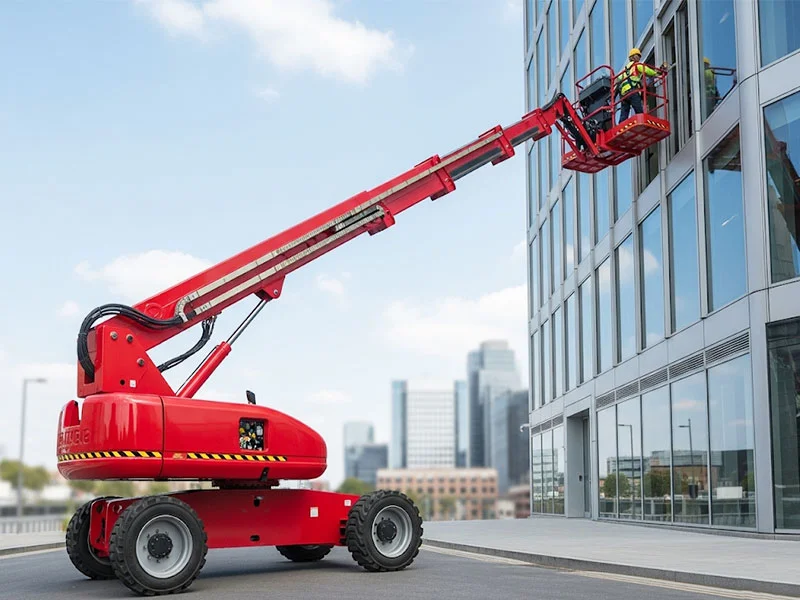
- Telescopic Boom Lifts (Stick Booms): These have a straight, extendable arm, ideal for jobs that require maximum horizontal and vertical reach. They’re great for tasks that need to get over an obstacle to access a job site.
- Articulating Boom Lifts (Knuckle Booms): These have multiple joints or “knuckles” in their boom, allowing them to bend and articulate over and around obstacles. They’re perfect for navigating tight spaces and reaching areas that a straight boom can’t access.
How They Differ from Other Platforms
The primary difference between a boom lift and other aerial platforms is its mobility. While a scissor lift provides a large, stable vertical platform, it can only lift straight up and down. A self-propelled boom lift, however, offers greater reach and flexibility, moving horizontally, vertically, and sometimes even at an angle. This makes it a more versatile option for complex tasks. A self-propelled boom lift is also distinct from a towable boom lift, which needs a truck or other vehicle to be moved.
Benefits of Using Boom Lifts in Various Applications
The ability of a self-propelled boom lift to reach great heights and difficult angles makes it an invaluable asset on job sites. They enhance safety by providing a stable work platform, reducing the risks associated with ladders or scaffolding. Their mobility also significantly boosts productivity, as workers can easily move from one task to the next without repositioning the entire lift.
Key Operational Advantages
The main advantages include:
- Versatility: A boom lift can be used in numerous environments, from indoor warehouses to rugged outdoor construction sites.
- Maneuverability: The ability to navigate obstacles and work in tight spaces is a huge plus.
- Increased Safety: A boom lift offers a secure platform with safety rails, reducing the risk of falls.
- Productivity: By saving time on setup and relocation, a self-propelled boom lift helps projects finish faster.
Boom Lift Applications in Urban Construction
In urban construction, a self-propelled boom lift is a staple. It’s used for tasks like:
- Erecting structural steel
- Installing glass panels and facades
- Working on rooftops
- Painting and exterior finishing
The compact footprint of some boom lift models allows them to operate on busy city streets with minimal disruption.
Industrial Maintenance and Inspection Applications
A self-propelled boom lift is crucial for industrial maintenance and inspection. They are used for:
- Inspecting and repairing large machinery
- Maintaining HVAC systems on factory ceilings
- Cleaning and inspecting high-rise storage tanks and silos
Their precise control and reach make them ideal for detailed inspection work and routine maintenance.
Boom Lift Usage in Material Handling and Warehousing
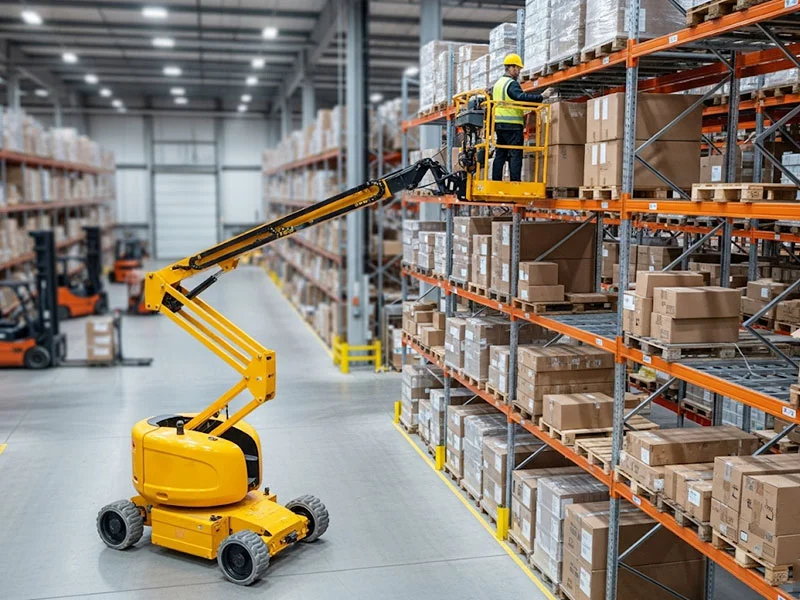
In large warehouses and distribution centers, a self-propelled boom lift is essential for material handling. They are used to:
- Access high storage racks
- Perform inventory checks
- Maintain lighting and sprinkler systems
- Install security cameras
The compact design of certain models allows for easy navigation through narrow aisles.
Applications in Outdoor Worksites and Infrastructure Projects
For large-scale infrastructure projects, such as bridge construction, power line maintenance, and telecommunication tower installation, a self-propelled boom lift is indispensable. Its all-terrain capabilities and high reach enable workers to perform tasks in challenging outdoor environments.
Boom Lifts for Specialized Engineering and R&D Projects
In specialized fields, a self-propelled boom lift is used for:
- Testing new equipment at height
- Setting up intricate camera systems for filming or observation
- Installing specialized sensors or instruments for research purposes
The precision and control offered by a self-propelled boom lift are critical for these tasks.
Self-Propelled Boom Lifts in Retail and Event Setup
Even in less traditional settings like retail and events, a self-propelled boom lift plays a vital role. They are used for:
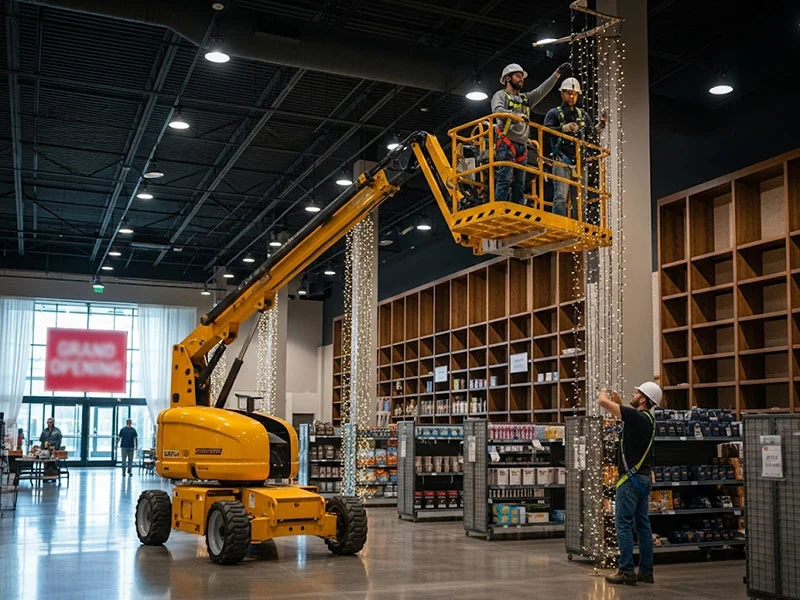
- Setting up high-level displays in retail stores
- Hanging decorations and lighting for events
- Rigging sound and light systems at concerts and festivals
Their ability to move around a venue makes setup and tear-down much more efficient.
Maintenance and Operational Efficiency Tips
To ensure your self-propelled boom lift operates safely and efficiently, follow these tips:
- Regular Inspections: Perform daily pre-operation checks, including fluid levels, tires, and all safety features.
- Operator Training: Ensure all operators are properly certified and trained on the specific model of self-propelled boom lift they are using.
- Proper Storage: Store the lift in a clean, dry area to protect it from the elements.
Conclusion
A self-propelled boom lift is a versatile and essential piece of equipment that offers significant advantages in safety, efficiency, and productivity across a wide range of industries. From bustling urban construction sites to quiet warehouse floors, its ability to lift workers to difficult-to-reach areas safely and effectively makes it a valuable asset for any project that requires work at height.
FAQs
What is the primary difference between a self-propelled boom lift and a scissor lift?
A self-propelled boom lift offers greater reach and can move horizontally and around obstacles, while a scissor lift only moves vertically.
How high can a self-propelled boom lift reach?
The reach of a self-propelled boom lift varies greatly by model, with some able to reach heights of over 180 feet.
Are all self-propelled boom lifts suitable for indoor use?
Not all are, but many compact, electric-powered models are designed specifically for indoor use due to their quiet operation and lack of emissions.
Is a license required to operate a self-propelled boom lift?
Yes, in most places, an operator must be properly trained and certified to operate a self-propelled boom lift safely.