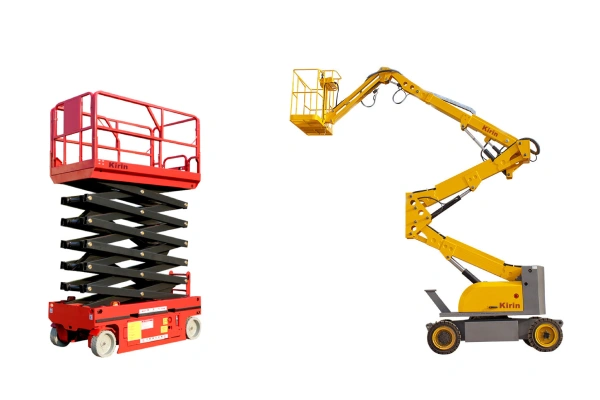
Construction and industrial jobsites are rarely smooth, level, or predictable. From unpaved commercial building zones to rugged outdoor infrastructure projects, accessing heights safely requires heavy machinery that handles challenging ground conditions.
When a standard slab lift cannot manage the mud, gravel, or steep slopes of an outdoor jobsite, the 4-Wheel Drive Scissor Lift becomes an indispensable asset. Engineered specifically for demanding environments, these rugged aerial work platforms provide the power, traction, and stability necessary to elevate personnel, tools, and heavy materials safely.
This comprehensive guide covers everything you need to know about the 4-Wheel Drive Scissor Lift, including its core features, major applications, maintenance requirements, and how to select the ideal model for your operational needs.
What Is a 4-Wheel Drive Scissor Lift?
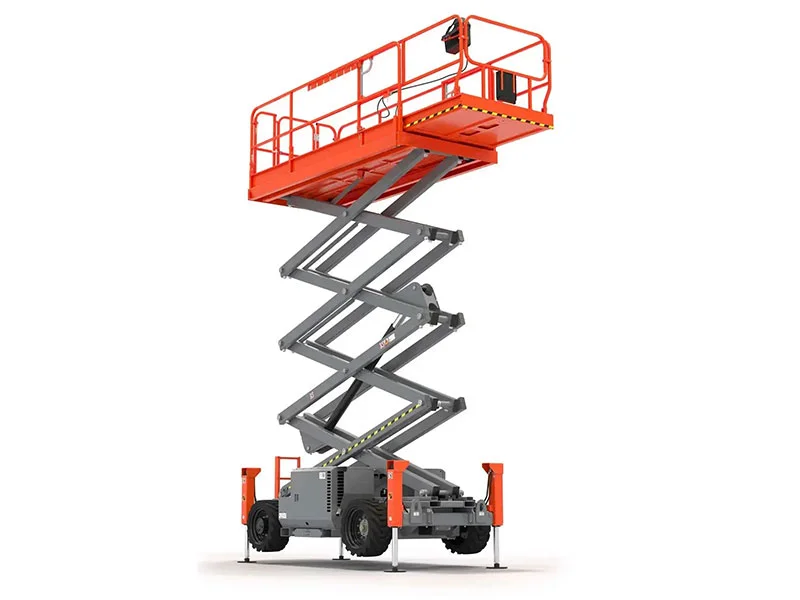
A 4-Wheel Drive Scissor Lift is a specialized, mobile aerial work platform designed to operate efficiently on unfinished, uneven, and rugged outdoor surfaces. Unlike traditional slab scissor lifts that feature small, solid non-marking tires meant exclusively for flat concrete floors, a 4-Wheel Drive Scissor Lift integrates an advanced drivetrain that delivers mechanical power to all four wheels simultaneously.
This constant power distribution prevents the machine from getting stuck in deep mud, loose sand, or thick gravel. Typically powered by robust diesel engines or high-capacity dual-fuel (Gas/LP) systems—and increasingly by advanced, heavy-duty electric batteries—these machines feature wide chassis designs, reinforced steel scissor stacks, and expansive platforms. They are built to thrive where infrastructure is nonexistent and terrain is entirely unpredictable.
Key Features of a 4-Wheel Drive Scissor Lift
The rugged capabilities of a 4-Wheel Drive Scissor Lift stem from targeted design choices intended to counter the unique hazards of unfinished outdoor jobsites.
Rough Terrain Tires
The most immediate visual differentiator of a 4-Wheel Drive Scissor Lift is its tire package. These machines utilize large, deep-tread pneumatic (air-filled) or foam-filled tires designed to bite into loose soil and climb over debris. Foam-filled options are highly favored on construction sites because they eliminate the risk of flat tires caused by stray nails, rebar, or sharp rocks.
High Ground Clearance
To navigate over rocks, mounds of earth, curbs, and construction debris without high-centering or damaging the undercarriage, a 4-Wheel Drive Scissor Lift features significantly high ground clearance. While an indoor lift might sit only 2 to 3 inches off the floor, a rough terrain 4-Wheel Drive Scissor Lift typically provides 8 to 12 inches of clearance, protecting vital hydraulic lines and drive components.
Automatic Leveling and Stabilizers
Operating at heights requires a perfectly level base. On uneven ground, a 4-Wheel Drive Scissor Lift utilizes hydraulic outriggers—often referred to as leveling jacks. With the touch of a button, the automatic leveling system extends these heavy-duty stabilizers to lift the chassis slightly off the ground, compensating for slopes and uneven grades to ensure a completely safe, level vertical ascent.
Large Platform Capacity
Outdoor installation tasks usually require multiple workers along with heavy tools, pipes, sheets of drywall, or cladding paneling. A 4-Wheel Drive Scissor Lift provides an exceptionally high unrestricted platform capacity, frequently ranging from 1,000 to well over 2,500 pounds. This allows teams to load up materials and minimize time-consuming trips up and down.
Extended Working Height
Industrial outdoor projects require substantial vertical reach. While indoor lifts max out early, a heavy-duty 4-Wheel Drive Scissor Lift can comfortably deliver working heights ranging from 30 feet to over 60 feet, giving tradespeople safe access to structural steel grids, bridge underpinnings, and multi-story commercial building facades.
Main Applications of a 4-Wheel Drive Scissor Lift
Thanks to their high structural durability, Four Wheel Drive scissor Lifts are utilized across a vast spectrum of heavy industries.
- Exterior Building Construction: Erecting steel frames, installing glass curtain walls, hanging architectural panels, and applying exterior insulation finish systems (EIFS).
- Infrastructure and Civil Engineering: Bridge inspections, highway signage installations, toll booth servicing, and structural maintenance within tunnels.
- Industrial Facilities & Refineries: Running long overhead pipe racks, servicing outdoor HVAC units, routing high-voltage electrical conduits, and maintaining large storage tanks.
- Entertainment and Event Production: Setting up massive outdoor festival stages, hanging overhead rigging for audio arrays, and placing stadium-level lighting packages on unpaved fields.
- Dock, Rail, and Shipyard Maintenance: Managing heavy container logistics infrastructure and inspecting high-clearance crane frameworks over mixed terrain.
Benefits of Using a 4-Wheel Drive Scissor Lift
Investing in a 4-Wheel Drive Scissor Lift or seeking a 4-wheel drive scissor lift for sale for your fleet provides distinct competitive advantages over using generalized lift machinery.
Superior Traction on Rough Terrain
Equipped with active oscillating axles and full-time four-wheel drive mechanics, these lifts maintain maximum tire contact with the earth. When one tire loses grip or dips into a hole, the torque is immediately redistributed to the remaining wheels, allowing the lift to drive through deep mud, slick grass, wet clay, and gravel fields seamlessly.
Increased Productivity
Because a 4-Wheel Drive Scissor Lift features an integrated roll-out deck extension, it dramatically increases the accessible work area. Workers can span a wider section of a wall or structure without requiring the operator to lower the platform, drive the machine a few feet over, level it again, and re-elevate. This saves hours of operational downtime every single day.
Enhanced Operator Safety
Safety is paramount when working at heights. The rigid engineering of a 4-Wheel Drive Scissor Lift, combined with its automatic leveling outriggers, eliminates the dangerous sway or tipping risks associated with deploying less capable machinery on questionable ground.
Versatility Across Multiple Industries
Whether you are a mechanical contractor routing ductwork on a muddy site or a masonry specialist washing down a finished brick facade, these machines adapt instantly. They serve as a highly secure, mobile, dual-person scaffolding alternative that sets up in seconds rather than days.
Reduced Need for Additional Equipment
Without a proper rough terrain 4-Wheel Drive Scissor Lift, companies often have to spend money preparing the ground—grading paths, pouring temporary gravel tracks, or laying down expensive ground protection mats just to let a standard slab lift navigate the space. A Four Wheel Drive scissor lift bypasses this entirely, saving immense logistical overhead.
4-Wheel Drive Scissor Lift vs. Standard Scissor Lift
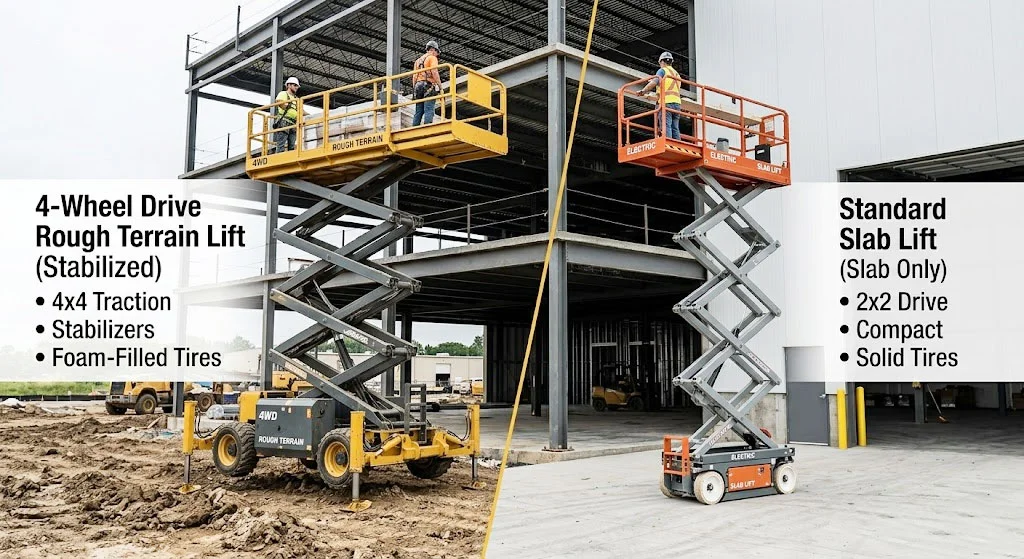
Understanding the operational boundary lines between a heavy-duty rough terrain unit and a standard slab unit is critical for site safety and efficiency.
| Feature / Capability | 4-Wheel Drive Scissor Lift | Standard Slab Scissor Lift |
| Drivetrain Configuration | Full-Time 4-Wheel Drive (4WD) | 2-Wheel Drive (2WD) |
| Tire Architecture | Large, Foam-Filled Lug / Rough Terrain Tires | Small, Solid Rubber, Non-Marking Wheels |
| Primary Power Source | Diesel, Dual-Fuel (Gas/LP), or Heavy Electric | Pure Electric (Deep-Cycle Battery Packs) |
| Gradeability (Slope Climbing) | Generally 35% to 50% Incline Capability | Generally 20% to 25% Maximum Incline |
| Stabilization Systems | Hydraulic Automatic Leveling Outriggers | Fixed Pot-Hole Protection Skirts |
| Chassis Width | Wide Stance (typically 5 to 8 feet for stability) | Narrow Stance (typically 2.5 to 4 feet for doorways) |
How to Choose the Right 4-Wheel Drive Scissor Lift
Selecting the perfect 4-Wheel Drive Scissor Lift requires analyzing your specific job site parameters to avoid under-specifying or over-paying for your equipment.
- Evaluate Maximum Working Height: Determine the highest point your workers must physically touch. Remember that “working height” is traditionally calculated by adding 6 feet to the platform floor height.
- Calculate Total Platform Weight Load: Sum up the weight of your heaviest two workers, plus the exact weight of all materials, toolboxes, and equipment they will carry simultaneously. Choose a machine with an unrestricted capacity that comfortably clears this total.
- Assess the Site Terrain and Grade: If your jobsite features steep embankments or heavily sloped entry points, pay close attention to the machine’s gradeability rating. If you must set up on hillsides, prioritize models with high-range outrigger leveling capabilities.
- Consider Power Source Restrictions: Outdoor, wide-open sites usually favor diesel models due to raw torque and fast refueling. However, if your project involves semi-enclosed structures, park preserves, or urban zones with strict noise and emission laws, look into eco-friendly, zero-emission electric Four Wheel Drive scissor Lifts.
- Review Transport Dimensions: Check the folded width, length, and stowed height of the machine. Ensure it fits comfortably on your standard transport trailers and can navigate through any gate openings on the project periphery.
Important Safety Tips for Operating a 4-Wheel Drive Scissor Lift
Every operator must be strictly trained and OSHA-certified before step-powering a 4-Wheel Drive Scissor Lift.
Safety Priority: Never operate a rough terrain scissor lift without completing a formal pre-start visual inspection and a comprehensive workplace hazard assessment.
- Always Deploy Outriggers on Slopes: Never attempt to elevate the platform on an incline without fully engaging the hydraulic leveling outriggers. Ensure all four stabilizer pads rest on solid ground, using cribbing plates if the dirt is exceptionally soft.
- Observe strict Wind Speed Limits: Scissor stacks act like large sails in high winds. Always check the manufacturer’s maximum wind speed rating (typically capped around 28 mph or 45 km/h). Never elevate the lift if outdoor gusts exceed this safe operating threshold.
- Wear Proper Fall Protection: Despite the presence of solid steel guardrails, operators should wear a full-body harness attached via an approved lanyard to designated anchor points on the platform chassis floor to protect against sudden jolts when driving over hidden ruts.
- Never Exceed Rated Load Limits: Oversaturating the platform moves the machine’s center of gravity dangerously upward. Distribute heavy loads evenly across the floor deck rather than stacking everything at one end.
- Maintain Clear Overhead Awareness: Before lifting the deck, scan upward for low-hanging structural beams, tree branches, or live electrical power lines. Maintain a minimum safe clearance distance of at least 10 feet from all overhead power sources.
Maintenance Tips for Long-Term Performance
Proactive maintenance keeps your 4-Wheel Drive Scissor Lift operating safely while protecting the resale value of your fleet assets.
Inspect Hydraulic Systems Regularly
The entire scissor mechanism relies on heavy hydraulic pressure. Inspect the lift cylinders, valves, and fluid hoses daily for any signs of sweating or direct leaks. Keep hydraulic fluid topped off to the manufacturer’s exact specified line using clean, contaminant-free fluid.
Maintain Tires and Drive Components
If using pneumatic tires, check inflation pressure daily; uneven pressure can cause dangerous platform shifts. For foam-filled tires, inspect the tread regularly for chunking, tearing, or deep gashes caused by jobsite debris. Regularly lubricate the steering linkages and oscillating axle components.
Keep the Lift Clean
Mud, salt, concrete dust, and gritty soils will accelerate wear on the machine’s scissor arm pins, bearings, and electrical terminal boxes. Pressure-wash the undercarriage and scissor stack regularly to prevent deep pitting corrosion, paying close attention to keeping the control box linkages clean.
Schedule Routine Preventive Maintenance
Adhere strictly to the manufacturer’s schedule for deep service intervals (typically structured around 250, 500, and 1,000 operational hours). Change engine oil, fuel filters, and hydraulic return filters routinely to protect internal engine components from premature wear.
Store Equipment Correctly
When storing a Drive-on scissor lift for extended periods, shield it with weather-resistant covers to protect controls from rainwater intrusion. For battery-powered models, keep the machine plugged into a smart-charging system in a temperature-regulated space to prevent deep-cycling battery degradation.
Common Problems and Troubleshooting
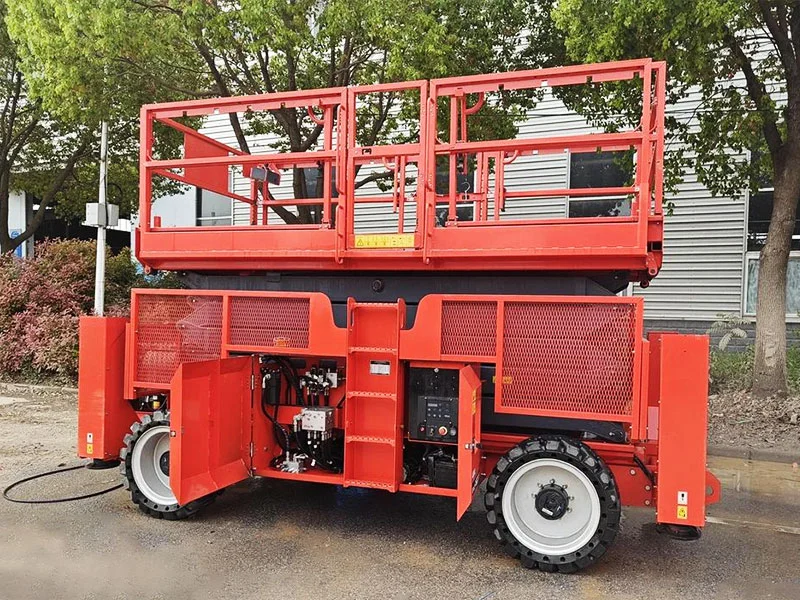
Even the toughest 4-Wheel Drive Scissor Lift can face mechanical issues on high-intensity jobsites. Here is a quick diagnostic guide for common field problems.
- The Engine Cranks But Will Not Start: Check the fuel levels immediately. On dual-fuel systems, verify that the propane LP tank valve is completely turned on and that the fuel selector switch on the control panel matches the fuel source. Ensure the master Emergency Stop (E-Stop) button is not pressed in.
- The Platform Lifts But Will Not Drive: This is an intentional built-in safety lockout. If the machine senses that it is tilted past its maximum allowable safe driving angle, it disables the drive function. Lower the platform entirely, move the machine to a more level footprint or deploy your outriggers, and try again.
- The Lift Functions Move Excessively Slow: This issue often stems from cold hydraulic fluid or a heavily clogged hydraulic return filter. Let the machine idle warm for several minutes before operating in freezing winter conditions to allow the fluid viscosity to stabilize.
- The Outriggers Will Not Extend: Ensure the platform is completely lowered. Most rough terrain models include safety limit switches that block outrigger movement if the scissor stack is even slightly elevated.
Frequently Asked Questions About 4-Wheel Drive Scissor Lifts
What is a 4-wheel drive scissor lift used for?
It is used to provide a stable, high-capacity elevated working platform for personnel and materials over unpaved, uneven, or muddy outdoor terrain. Common tasks include structural steel erection, cladding installation, outdoor electrical work, and facility maintenance.
Can a 4-wheel drive scissor lift be used indoors?
Yes, provided it is powered by an electric battery or if the indoor area has massive industrial ventilation capable of safely exhausting diesel or LP emissions. However, keep in mind their wide chassis setups and high machine weight may not clear standard commercial doorways or floor load capacities.
What terrain can rough terrain scissor lifts handle?
They can easily manage unpaved construction paths, packed dirt, loose gravel, thick mud, wet sand, grassy fields, and sloped embankments up to their specific gradeability rating (typically 35% to 50%).
How high can a 4-wheel drive scissor lift reach?
Depending on the specific make and model size class, their reach varies significantly. Smaller utility models offer around 26 to 32 feet of working height, while massive industrial models extend up to 50, 60, or even 70 feet vertically.
Are 4-wheel drive scissor lifts safe on slopes?
They are safe provided you do not exceed the manufacturer’s maximum slope rating and always fully deploy the automatic leveling hydraulic outriggers to establish a perfectly level base before raising the platform framework.
What is the average weight capacity?
Rough terrain 4-wheel drive variants offer much higher structural capacities than indoor models. Unrestricted weight limits generally range from 1,000 lbs to upwards of 2,500 lbs on large, heavy-duty double-extension deck models.
Conclusion
The 4-Wheel Drive Scissor Lift is the ultimate workhorse for contractors who need to take heavy tools and crews safely into rough, unpaved territory. By combining massive weight capacities, rugged tire packages, and automatic leveling systems, these machines turn difficult outdoor aerial work into a highly manageable, efficient, and safe operation.
Investing time into selecting the right model sizing, training your operators thoroughly, and executing routine preventative maintenance ensures that your lift will deliver reliable, high-tier performance on your jobsites for years to come.
If you are looking to add a reliable rough terrain asset to your fleet or need expert guidance on choosing the right model for your next project, our team is here to help. Reach out to us today for specifications, pricing, and support:
- Email: info@klingtec.com
- WhatsApp: +86 188 6686 3188